Henry Gannett

Biographical details

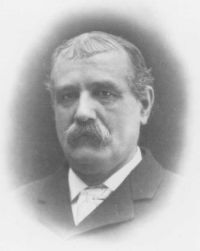
Portrait of Henry Gannett Henry Gannett Popular Science Monthly (1880)

The dry atmosphere and the parched earth have absorbed it, and a dry cañon alone remains to mock the thirsty traveler. Reaching the edge of one of these cañons, five hundred or perhaps a thousand feet deep, with precipitous sides, one experiences a feeling akin to superstitious fear when, after descending to the bottom, and fully expecting to hear the rushing of a torrent of crystal water, he finds only a stream-bed of hot, glistening sand.
Source: Wikisource

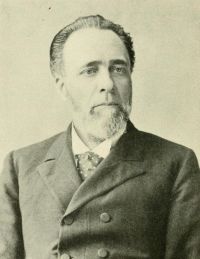
Portrait of Henry Gannett Henry Gannett Encyclopædia Britannica, Ninth Edition (1881)

While the area is larger than that of the United States, the Indian population is but about two-fifths as great, and the whites are but one-tenth. The Indians still hold their favourite hunting and fishing grounds; the game and fish have not yet sensibly decreased; and the whites do not yet so press upon them as to arouse their jealousy and suspicion. The history of the Indian tribes in the United States, from the time of the first occupation of the country by the whites, has been one of forced migrations, always westward, to make way for the repeated encroachments of civilization.
Source: Wikisource

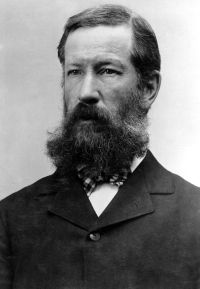
Portrait of Henry Gannett Henry Gannett Popular Science Monthly (1880)

One by one their warriors fell; step by step they were driven southward, until at last, totally discouraged and disheartened, and with ranks terribly thinned, they abandoned the homes of their fathers, and wandered southward, some to build on almost inaccessible heights—the Moquis towns of the present day—some to wander to the site of Zuni, others to the Rio Grande, where their descendants are found to-day: but, as is so often the case with a people forcibly transplanted from their native soil, they have deteriorated from their former state of civilization.
Source: Wikisource

Get perspective with Kwize: daily news enlightened by great literature