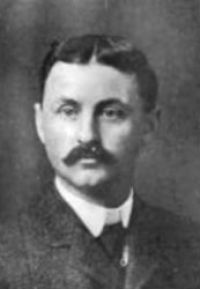
Henry R. Seager

Biographical details

Henry R. Seager,  The New International Encyclopædia (1905)

“ Value, even under conditions of free competition, does not tend, therefore, to be in proportion to quantity of labor, but to quantities of labor and capital.
John Stuart Mill's observation that labor creates utilities, not matter, exposed the artificial character of Adam Smith's distinction between productive and unproductive labor. It is now recognized on all sides that the labor of physicians, lawyers, actors, etc., is just as productive as the labor of farmers and mechanics. All add to society's fund of consumable utilities, and this is the essence of production.
”
Source: Wikisource

Henry R. Seager,  The New International Encyclopædia (1905)

“ Other aspects of labor to which increasing attention is given by economists are the circumstances which determine the worker's industrial efficiency. It is now recognized that the food, clothing, housing, etc., of the working classes are important, not merely because they affect the happiness of those classes, but because upon them depends the amount and quality of the work that can be performed. The standard of living influences wages not merely through the control which it may exercise over the rate at which population increases, but also because it determines the standard of efficiency. ”
Source: Wikisource

Henry R. Seager,  The New International Encyclopædia (1905)

“ The other line of development has been away from the view that labor alone regulates value, and toward the conception that value is determined primarily by marginal utility, which measures the intensity of the demand for goods. Economists accepting the latter view recognize that value tends under certain conditions to correspond to the cost of production, as Ricardo argued, but find in the latter remuneration not merely for the sacrifice involved in labor, but also for that involved in saving and investing income in preference to spending it. ”
Source: Wikisource

Get perspective with Kwize: daily news enlightened by great literature