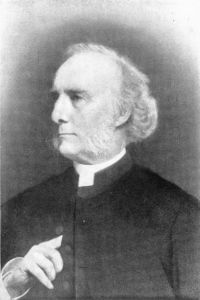
Henry William Clarke

Biographical details

Henry William Clarke,  A history of tithes (1894)

“ As for the poor of the parish, it is too much to expect, as Lord Selborne remarks above, that the poor of 1391, or 500 years ago, had their legal remedy against the powerful and rich monastic corporation in order to enforce their common law and legal rights to one-third of the tithes. Why, in this enlightened and advanced age, as compared with 1391, the poor are coerced and defrauded of their rights by the wealthy, who know that they have not the means “to enforce their rights” in the superior courts—a luxury which can only be enjoyed by those who have a good banking account. ”
Source: Gutenberg

Henry William Clarke,  A history of tithes (1894)

“ It is revolting to all Christian principles enunciated in the New Testament, that men should be imprisoned, or their goods seized, or, even as it has happened in Ireland within this century, be shot dead, because they refuse to pay tithes. But there have been, and there are still, men in England who unblushingly justify all the above means by which an odious and unscriptural tax should be collected for the support of the ministers of the Church of England. Some foolish writers assert that the payment of tithes is not a tax. ”
Source: Gutenberg

Henry William Clarke,  A history of tithes (1894)

“ When this custom commenced, the population of England and Wales could not have exceeded 160,000, with less than a quarter of a million of acres under cultivation, and yet this custom, originating under the above circumstances, generated a common law right, which legally bound all subsequent generations to the payment of predial, mixt, and personal tithes. I call this barefaced injustice. It is utterly wrong to state, as some Church defenders do, that all the parochial tithe endowments were voluntarily bestowed on the Church by the landowners. ”
Source: Gutenberg

Get perspective with Kwize: daily news enlightened by great literature