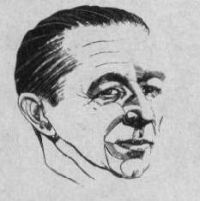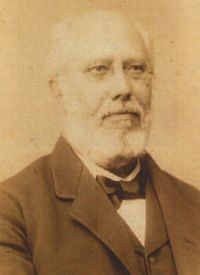
Joseph Rémi Léopold Delbœuf

Biographical details

Portrait of Joseph Rémi Léopold Delbœuf Joseph Rémi Léopold Delbœuf Popular Science Monthly (1883)

To impress the same speed on a mass of fifteen millions of ants—which I take to represent the volume of a man—would require a force fifteen millions greater. This force is developed by a man going two and a half metres a minute, while in the same space of time he can easily accomplish a hundred metres and more. In this case, then, if we take notice of any one of the data, the man manifests a strength forty times greater in proportion than that of the ant.
Source: Wikisource

Portrait of Joseph Rémi Léopold Delbœuf Joseph Rémi Léopold Delbœuf Popular Science Monthly (1883)

These matters of weight, measure, and calculation must have some synthesis or useful purpose in view. They should throw light upon some law, and that a law which is an idea, or which is susceptible of being converted into an idea. It is the philosophic thought penetrating them that gives interest to the statistical labors of Quetelet. The cry of the positivists of the day is for "facts!" To that I oppose another cry: "Ideas! give us ideas!" A fact without an idea is a body without a soul, a useless incumbrance to the memory.
Source: Wikisource

Portrait of Joseph Rémi Léopold Delbœuf Joseph Rémi Léopold Delbœuf Popular Science Monthly (1883)

While a horse weighing six hundred kilogrammes can hardly support four hundred kilogrammes, or two thirds of his weight, he found May-bugs, weighing a sixth of a gramme, able to support sixty-six times their own weight, or more than ten grammes. Here, then, was a humble and stupid beetle a hundred times as strong in proportion as the proud and sturdy horse. Another little insect, weighing half a decigramme could move a hundred times its weight.
Source: Wikisource

Get perspective with Kwize: daily news enlightened by great literature