“ Our mother Nature is kind to me, And I am beloved by bird and bee, And never a child that passes by But turns upon me a grateful eye. Over my head the skies are blue; I have my share of the rain and dew; I bask like you in the summer sun When the long bright days pass, one by one, And calm as yours is my sweet repose Wrapped in the warmth of the winter snows. For little our loving mother cares Which the corn or the daisy bears, Which is rich with the ripening wheat, Which with the violet’s breath is sweet, Which is red with the clover bloom, Or which for the wild sweet-fern makes room. ”
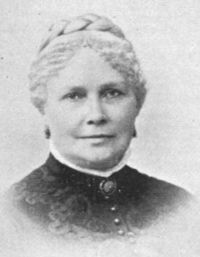
Julia C. R. Dorr
Biographical details

Julia Caroline Ripley Dorr (1825–1913), an American author and poet, is celebrated for her commitment to conservative values and careful attention to detail in both her prose and poetry. Her works, including Poems (1872) and novels like Farmingdale (1854) and Sibyl Huntington (1869), reflect a focus on moral clarity, New England cultural identity, and the balance between personal responsibility and spiritual determination.
Known for her sonnets and patriotic themes—such as her ode Vermont—Dorr’s writing combines formal elegance with emotional depth, earning her recognition among literary figures like Emerson and Lowell. Her legacy lies in her ability to capture the ideals of her era in lasting, elegantly composed expressions of faith and domestic idealism.
Quotes by Julia C. R. Dorr
“ Is there no pure trust in woman? No conquering faith in God? Are there no feet strong to follow In the paths the martyrs trod? Did you find no hero graves When your violets bloomed last May— Prouder than those of Marathon, Or ‘old Platea’s day’? When your red and white and blue On the free winds fluttered out, Were there no strong hearts and voices To receive it with a shout? Oh! let the Earth grow old! And the burning stars grow cold! And, if you will, declare man’s story told! Yet, pure as faith is pure, And sure as death is sure, As long as love shall live, shall song endure! ”
“ She loved you at that time entirely, in the bloom of her life’s early May, And it is not her fault, I repeat it, that she does not love you to-day. Nature never stands still, nor souls either. They ever go up or go down; And hers has been steadily soaring,—but how has it been with your own? [12] She has struggled, and yearned, and aspired,—grown stronger and wiser each year; The stars are not farther above you, in yon luminous atmosphere! For she whom you crowned with fresh roses, down yonder, five summers ago, Has learned that the first of our duties to God and ourselves is to grow. ”


