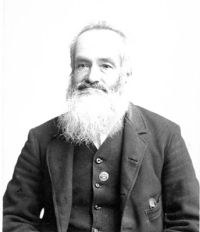
S. Khuda Bukhsh

Biographical details

S. Khuda Bukhsh,  The Calcutta Review, 3rd Series… (1925)

“ The hand that so deftly guided the political destiny of Bengal is, alas, now no-more to guide her; to lead her to the fondly wished-for goal—Self-Government. His death is a national calamity; for, quite irrespective of caste and creed—all feel that a shattering blow has been dealt at India’s aspirations—a hopeless void created—beautiful Hind suddenly bereft of her crowning glory! And if this is the case in the sphere of politics—no less keen and acute is the sense of loss in the social sphere. All feel his death as a personal loss—an irreparable loss. ”
Source: Wikisource

S. Khuda Bukhsh,  The Islam of Mohamed

“ What a noble idea of life and religion do we find here. It is not merely the recitation of prayers which constitutes righteousness but in solemnly acting the religion we profess; in tender regard for the poor and the orphan, the forlorn and the suffering; in relieving the miseries of the captives, in holding by the promises made, in enduring with calm fortitude the trials and reverses of fortune. Here, in this passage, we have the key to Islam, nay, I would go further and say a key to all religions. It is only the clouded vision which sees difference between one religion and the other ”
Source: Gutenberg

S. Khuda Bukhsh,  The Islam of Mohamed

“ An Arab has no excellence or superiority over a barbarian than that which is secured to him by his God-fearing and righteousness. Ye are all the progeny of Adam, and Adam himself is of the Earth.”
No caste and no priestcraft does Islam recognise. Every Muslim is his own priest and every spot of land is his mosque to pray and to worship Allah. For no other purpose than to keep alive the sense of corporate unity of the Muslims did the prophet declare the superiority of the public prayer over prayer by oneself and establish the institution of pilgrimage.
”
Source: Gutenberg

Get perspective with Kwize: daily news enlightened by great literature