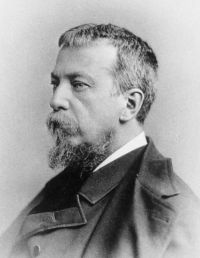
Silas Weir Mitchell

Biographical details

Portrait of Silas Weir Mitchell Silas Weir Mitchell,  The Atlantic Monthly (1866)

“ No more passed, and I saw this man no longer, for another set of doctors were handling my legs, for the first time causing pain. A moment after, a steward put a towel over my mouth, and I smelt the familiar odor of chloroform, which I was glad enough to breathe. In a moment the trees began to move around from left to right,—then faster and faster; then a universal grayness came before me, and I recall nothing further until I awoke to consciousness in a hospital-tent. I got hold of my own identity in a moment or two, and was suddenly aware of a sharp cramp in my left leg. ”
Source: Wikisource

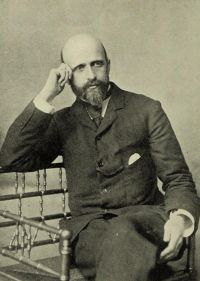
Portrait of Silas Weir Mitchell Silas Weir Mitchell,  The Atlantic Monthly (1866)

“ I concluded that it would be at a minimum, and that, if utter loss of relation to the outer world were capable of destroying a man's consciousness of himself, the destruction of half of his sensitive surfaces might well occasion, in a less degree, a like result, and so diminish his sense of individual existence.
I thus reached the conclusion that a man is not his brain, or any one part of it, but all of his economy, and that to lose any part must lessen this sense of his own existence.
”
Source: Wikisource

Portrait of Silas Weir Mitchell Silas Weir Mitchell,  The Atlantic Monthly (1866)

“ When the doctor came, I begged for morphia. He said gravely: "We have none. You know you don't allow it to pass the lines."
I turned to the wall, and wetted the hand again, my sole relief. In about an hour, Dr. Wilson came back with two aids, and explained to me that the bone was so broken as to make it hopeless to save it, and that, besides, amputation offered some chance of arresting the pain. I had thought of this before, but the anguish I felt—I cannot say endured—was so awful, that I made no more of losing the limb than of parting with a tooth on account of toothache.
”
Source: Wikisource

Get perspective with Kwize: daily news enlightened by great literature