Deal
Definition and stakes
The concept of a "deal" includes both literal agreements and metaphorical exchanges, illustrating negotiations, compromises, or bargains across different contexts. Ranging from tangible trade to moral balance, writers have examined its many facets: O. Henry humorously portrays a "new deal" as a king’s rightful share, while Theodore Roosevelt promotes a "square deal" as a standard of fairness for everyone.
Legal writings, such as Owen J. Roberts’ focus on shared dependence, differ from political speeches, like Harry S. Truman’s plea for a "fair deal" from the government. Edmund Burke, on the other hand, criticizes transactions that prioritize commerce over imperial goals. These differing viewpoints highlight the theme’s shift from economic exchange to a moral necessity.
Quotes about “Deal”

1911 Encyclopædia Britannica (1911)
“ In the time of Henry VIII. Deal was merely a fishing village standing half-a-mile from the sea, but the growth of the English navy and the increase of trade brought men-of-war and merchant ships in increased numbers to the Downs. Deal began to grow in importance, and Lower or New Deal was built along the shore. The prosperity of the town has ever since depended almost entirely on its shipping trade. ”
Owen J. Roberts, Dakin v. Bayly — Opinion of the Court
“ Each deals, and is entitled to deal, with the other in reliance upon the security of the paper, indorsed without restriction, and transmitted, or expected to be transmitted, in the usual course of the transactions between them. ”
 Theodore Roosevelt,
A Square Deal
Theodore Roosevelt,
A Square Deal
“ A man who is good enough to shed his blood for the country is good enough to be given a square deal afterwards. More than that no man is entitled to, and less than that no man shall have. ”
Theodore Roosevelt,
Theodore Roosevelt: An Autobiography
(1913)
“ We demand that big business give the people a square deal; in return we must insist that when any one engaged in big business honestly endeavors to do right he shall himself be given a square deal; ”
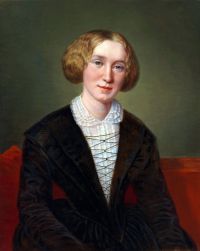 George Eliot,
The Mill on the Floss
(1860)
George Eliot,
The Mill on the Floss
(1860)
“ We get a deal o’ useless things about us, only because we’ve got the money to spend.” ”
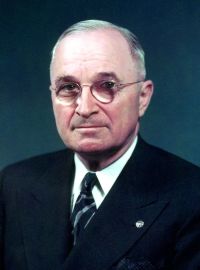 Harry S. Truman,
State of the Union Addresses
Harry S. Truman,
State of the Union Addresses
“ Every segment of our population and every individual has a right to expect from our Government a fair deal. ”
Theodore Roosevelt,
American problems
“ When I say that I am for the square deal, I mean not merely that I stand for fair play under the present rules of the game, but that I stand for having these rules changed so as to work for a more substantial equality of opportunity and of reward for equally good service. ”
 Edmund Burke,
The Works of the Right Honourable Edmund Burke…
Edmund Burke,
The Works of the Right Honourable Edmund Burke…
“ Is it by another treaty of commerce? I have no objections to treaties of commerce upon principles of commerce. Traffic for traffic,—all is fair. But commerce in exchange for empire, for safety, for glory! We set out in our dealing with a miserable cheat upon ourselves. ”
 Henry Charles Carey,
Letters on International Copyright…
Henry Charles Carey,
Letters on International Copyright…
“ Finding that no bill that could be prepared could stand the ordeal of public discussion, a treaty has been negotiated, the terms of which seem to be known to none but the negotiators, and that treaty has been sent to your House of Congress, there to be discussed in secret session by a number of gentlemen, most of whom have given little attention to the general principle involved, while not even a single one can be supposed qualified to judge of the practical working of the provisions by whose aid the principle is to be carried out. ”
 Adam Smith,
The Wealth of Nations
(1776)
Adam Smith,
The Wealth of Nations
(1776)
“ The interest of the dealers, however, in any particular branch of trade or manufactures, is always in some respects different from, and even opposite to, that of the public. ”
Edmund Burke,
Reflections on the Revolution in France
(1790)
“ The new dealers, being all habitually adventurers, and without any fixed habits or local predilections, will purchase to job out again, as the market of paper or of money or of land shall present an advantage. ”
Adam Smith,
The Wealth of Nations
(1776)
“ When the profits of trade happen to be greater than ordinary over-trading becomes a general error, both among great and small dealers. ”
Theodore Roosevelt,
Presidential addresses and State papers…
“ The immediate necessity in dealing with trusts is to place them under the real, not the nominal, control of some sovereign to which, as its creatures, the trusts shall owe allegiance, and in whose courts the sovereign’s orders may be enforced. ”
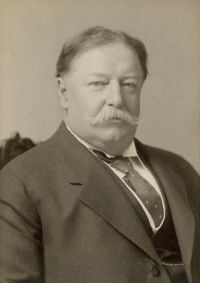 William Howard Taft,
Fourth State of the Union Address
(1912)
William Howard Taft,
Fourth State of the Union Address
(1912)
“ The diplomacy of the present administration has sought to respond to modern ideas of commercial intercourse. This policy has been characterized as substituting dollars for bullets. It is one that appeals alike to idealistic humanitarian sentiments, to the dictates of sound policy and strategy, and to legitimate commercial aims. ”
Nathan Clifford, Berthold v. Goldsmith — Opinion of the Court
“ Partnership is usually defined to be a voluntary contract between two or more competent persons, to place their money, effects, labor, and skill, or some one or all of them, in lawful commerce or business, with the understanding that there shall be a communion of the profits thereof between them. ”
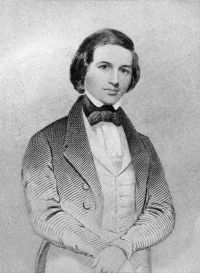 T. S. Arthur,
Off-Hand Sketches, a Little Dashed with Humor
T. S. Arthur,
Off-Hand Sketches, a Little Dashed with Humor
“ You make him the offer to give or take three thousand dollars, and I will supply the money. But you ought, by all means, to add a stipulation, that whoever goes out shall sign a written agreement not to go into the same business for at least ten years to come. If you don't do this, he can take his three thousand dollars and start another establishment upon as large a scale as the one you have, and seriously affect your operations. ”
Various, The Scrap Book, Volume 1, No. 6
“ I bring to you the confident assurance that in anything you do here to-night to bring about the negotiation of a stable treaty of arbitration with your old country you will have with you the solid common sense of the American people.We must stand together, and we must find a safe, solid, and ample ground on which to stand together. That ground is a program in which the deliberations of reason must supplant the folly of force.We should have reciprocity in the fullest meaning of the word. Not only commercial reciprocity, but a fair exchange of truth, of trade, and of treaties. ”
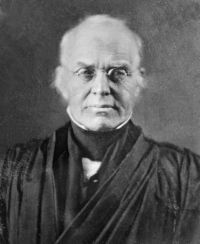 Joseph Story,
Commentaries on the Constitution of the United States
(1833)
Joseph Story,
Commentaries on the Constitution of the United States
(1833)
“ Is money wanted; how much more easy and cheap to borrow upon the faith of a nation competent to pay, than of a single state of fluctuating policy. Is confidence asked for the faithful fulfilment of treaty stipulations ”
Sir John W. Salmond, Jurisprudence (1913)
“ An agreement is bilateral, in this latter signification, if there is something to be done by each party to it, while it is unilateral if one party is purely passive and free from legal obligation, all the activity and obligation being on the other side. An agreement to lend money is bilateral, while an agreement to give money is unilateral. ”
Alexander Hamilton, The Federalist (1863, Dawson edition)
“ A nation, with which we might have a treaty of commerce, could with much greater facility prevent our forming a connection with her competitor in trade; though such a connection should be ever so beneficial to ourselves. ”
 Anthony Trollope,
Phineas Redux
(1874)
Anthony Trollope,
Phineas Redux
(1874)
“ "I should have thought any dealer would have taken him back for the sake of his character.""Any dealer would; ”
William Lewis Herndon, Lieutenant, U.S.N., Exploration of the Valley of the Amazon… (1853)
“ The second article of that treaty declares that, “The two high-contracting parties hereby bind and engage themselves not to grant any favor, privilege, or immunity whatever, in matters of commerce and navigation, to other nations, which shall not be also immediately extended to the citizens of the other contracting party, who shall enjoy the same gratuitously, or on giving a compensation as nearly as possible of proportionate value and effect, to be adjusted by mutual agreement, if the concession shall have been conditional.” ”
 Frederick Marryat,
Diary in America, Series Two
Frederick Marryat,
Diary in America, Series Two
“ No State shall enter into any treaty, alliance, or confederation; grant letters of marque and reprisal; coin money; emit bills of credit; make anything but gold and silver coin a tender in payment of debts; pass any bill of attainder, ex post facto law, or law impairing the obligation of contracts ”
Charles W. Pierson, Our Changing Constitution
“ A familiar illustration is the sale of a business and its goodwill, accompanied by a covenant on the part of the vendor not to compete. Such a covenant is collateral to the sale, and if not broader than is reasonably required for the protection of the vendee it will be upheld, although a similar agreement, standing alone and not collateral to a sale or other lawful transaction, would be in direct restraint of trade and unlawful. ”
 Thomas Erskine Holland,
Encyclopædia Britannica, Ninth Edition
(1888)
Thomas Erskine Holland,
Encyclopædia Britannica, Ninth Edition
(1888)
“ The analogy between treaty-making and legislation logics, is striking when a congress agrees upon general principles which are afterwards accepted by a large number of states, as, for instance, in the case of the Geneva convention for improving the treatment of the wounded. Many political treaties containing "transitory" conventions, with reference to recognition, boundary, or cession, become, as it were, the title-deeds of the nations to which they relate. 1 But the closest analogy of a treaty is to. a contract in private law, as will appear from the immediately following paragraphs. ”
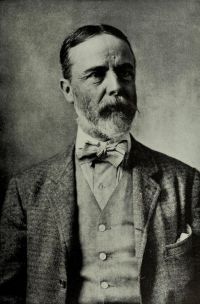 Frederic Jesup Stimson,
Popular Law-making
Frederic Jesup Stimson,
Popular Law-making
“ An act done in pursuance of an agreement or combination by two or more persons shall, if done in contemplation or furtherance of a trade dispute, not be actionable unless the act, if done without any such agreement or combination, would be actionable. ”
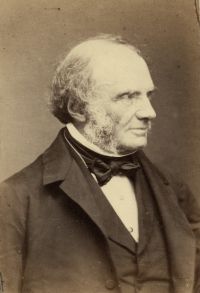 John Russell, 1st Earl Russell,
The Annexation of Cracow
(1847)
John Russell, 1st Earl Russell,
The Annexation of Cracow
(1847)
“ Those whom we consulted, who were the highest authorities that we could consult with regard to the interpretation of Acts of Parliament bearing upon treaties—the legal authorities who are usually consulted on those subjects—have told us, that they think, according to the spirit of the arrangement, according to the spirit of the convention, the money ought still to be paid. ”
Marcus Clarke, For the Term of His Natural Life…
“ Surely not this only, for marriage is but a partnership—a contract of mutual fidelity—and in all contracts the violation of the terms of the agreement by one of the contracting persons absolves the other. ”
Adam Smith,
The Wealth of Nations
(1902)
“ WHEN a nation binds itself by treaty either to permit the entry of certain goods from one foreign country which it prohibits from all others, or to exempt the goods of one country from duties to which it subjects those of all others, the country, or at least the merchants and manufacturers of the country, whose commerce is so favored, must necessarily derive great advantage from the treaty. Those merchants and manufacturers enjoy a sort of .monopoly in the country which is so indulgent to them. ”
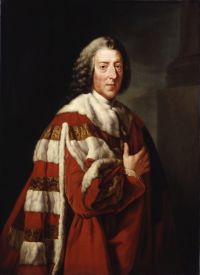 William Pitt, 1st Earl of Chatham,
The State of the Nation
(1770)
William Pitt, 1st Earl of Chatham,
The State of the Nation
(1770)
“ As a contract, every article of it should be inviolable; as the common basis of the strength and happiness of two nations, every article of it should be sacred. I hope I can not be suspected of conceiving a thought so detestable as to propose an advantage to one of the contracting parties at the expense of the other. ”
John Lord, The Old Roman World : the Grandeur and Failure of Its Civilization
“ The acts of one partner were not binding on another, if he acted beyond the scope of the partnership. If one of the partners advanced money on account of the partnership, each of the partners were bound to contribute to the indemnity in proportion to his share of the concern ”
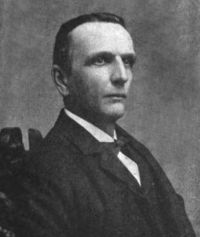 Henry Goudy,
1911 Encyclopædia Britannica
(1911)
Henry Goudy,
1911 Encyclopædia Britannica
(1911)
“ Modern historical jurists are pretty well agreed that not only the real contracts of loan (mutuum and commodatum) , deposit, and pledge, but also the consensual ones of sale, location, partnership, and mandate, and the verbal one of suretyship, were as yet barely recognized by law. The law recognized conveyance but hardly contract. Sale was the offspring of barter—of instant exchange of one thing for another. With such instant exchange there was no room for obligation to deliver on either side. ”
 Thomas Jefferson,
Memoir, Correspondence, and Miscellanies…
Thomas Jefferson,
Memoir, Correspondence, and Miscellanies…
“ You will proceed to negotiate with his minister the terms of a treaty of amity and commerce, as nearly conformed as possible to the draught we give you. Where alterations, which, in your opinion, shall not be of great importance, shall be urged by the other party, you are at liberty to agree to them. ”
Alexander Hamilton, The Federalist (1898)
“ We maintain that in every compact between two or more parties, the obligation is mutual—that the failure of one of the contracting parties to perform a material part of the agreement entirely releases the obligation of the other, and that, where no arbiter is appointed, each party is remitted to his own judgment to determine the fact of failure with all its consequences. ”
Frederick Pollock, 1911 Encyclopædia Britannica (1911)
“ All that remains of the old rules in England is the necessity of valuable consideration, whatever be the form of the contract, and a strong presumption—but not an absolute rule of law—that an unqualified agreement not to carry on a particular business is not reasonable. ”
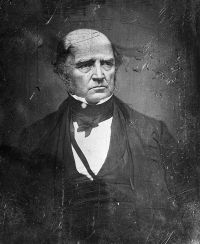 Levi Woodbury,
Le Roy v. Beard — Opinion of the Court
Levi Woodbury,
Le Roy v. Beard — Opinion of the Court
“ The covenants, or security as to the title, would be likely to be among the terms agreed on, as they would influence the trade essentially, and in a new and unsettled country must be the chief reliance of the purchaser. ”
Benjamin Harrison, A Compilation of the Messages and Papers of the Presidents…
“ The real difficulty in the way of negotiating profitable reciprocity treaties is that we have given freely so much that would have had value in the mutual concessions which such treaties imply. I can not doubt, however, that the present advantages which the products of these near and friendly States enjoy in our markets, though they are not by law exclusive, will, with other considerations, favorably dispose them to adopt such measures, by treaty or otherwise, as will tend to equalize and greatly enlarge our mutual exchanges. ”
Joseph Story,
Commentaries on the Constitution of the United States
(1833)
“ Society is indeed a contract. Subordinate contracts for objects of more occasional interest may be deposited at pleasure. But the state ought not to be considered as nothing better than a partnership agreement in a trade of pepper and coffee, calico or tobacco, or some other such low concern, to be taken up for a little temporary interest, and to be dissolved by the fancy of the parties. ”
Horace Gray, Meehan v. Valentine — Opinion of the Court
“ One binds the others so far only as he is the agent of the others.' 'A man who shares in the profit, although his name may not be in the firm, is responsible for all its debts.' 'Stipulations [restricting the powers of partners] may bind the partners, but ought not to affect those to whom they are unknown, and who trust to the general and wellestablished commercial law.' Winship v. ”
1911 Encyclopædia Britannica (1911)
“ The vast majority of trade disputes are settled by mutual arrangement, and whether such arrangement is wholly in favour of one or other party, or involves a compromise, its terms provide that the whole or part of the body of work-people whose labour was withheld or excluded shall return on agreed conditions to their former employment. ”
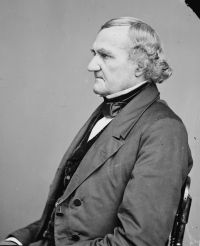 John Catron,
Buchannon v. Upshaw — Opinion of the Court
John Catron,
Buchannon v. Upshaw — Opinion of the Court
“ The simple question is, after such a contract, after such an agreement, after a sale to a third person, and payment in full by that third person, can the vendor say to the new purchaser, 'You have paid your immediate vendor just as I agreed you should, and I took his covenant. ”
 George Fox Tucker,
International Law
George Fox Tucker,
International Law
“ In a narrower sense treaties may be divided into many classes, as political, economic, guarantee, surety, neutrality, alliance, friendship, boundary, cession, exchange, jurisdiction, extradition, commerce, navigation, peace, etc., and conventions relating to property of various kinds, including literary and artistic, to post and telegraph, etc. ”
Nathan Clifford, Kimbro v. Bullitt — Opinion of the Court
“ But, independently of any such stipulations, each partner possesses an equal and general power and authority, in behalf of the firm, to transact any business within the scope and objects of the partnership, and in the course of its trade and business. ”
