Summary

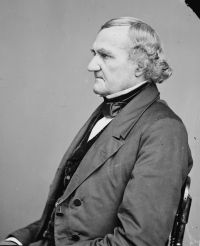
Portrait of John Catron John Catron Buchannon v. Upshaw — Opinion of the Court

Is it not a rule in equity, that where the party to a contract not only neglects to perform it, but, by his conduct, evinces a determination not to perform it, that the opposite party is at liberty to put an end to it; and that where the purchaser neglects for an unreasonable length of time, although often requested, to pay the purchase-money, and in the mean time, as in the present-case, the land has increased in value tenfold, that a court of equity will not interpose in his behalf, by compelling the specific execution of the contract?
Source: Wikisource

Portrait of John Catron John Catron Buchannon v. Upshaw — Opinion of the Court

With full knowledge, he allowed them to go on for thirty years, wasting the best of their lives in reclaiming this land from the wilderness. They have been guilty of no laches-of no bad faith. They say in their bill that they were in total ignorance of his claim, or of any defect in their title, until he recovered against them in the last ejectment; and all this Upshaw admits in his answer. They never refused to pay the Buckner debt, for it was never demanded of them.
Source: Wikisource

Portrait of John Catron John Catron Buchannon v. Upshaw — Opinion of the Court

Whenever the holder of a legal title encourages a purchaser to deal with another for his estate, or invests another person with the means of imposing upon others as the true owner, or is silent when a purchaser is dealing with another for his estate, a court of equity will never allow him afterwards to assert that legal title against the purchaser.
In a court of equity, when the conscience of the party is not affected, the holding of the legal title is every thing. A satisfied mortgage, an outstanding term, a deed surreptitiously obtained, are equally available
Source: Wikisource

Get perspective with Kwize: daily news enlightened by great literature