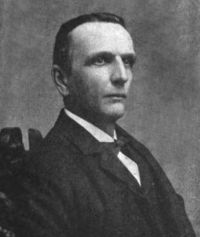
Henry Goudy

Henry Goudy

Summary

Portrait of Henry Goudy Henry Goudy 1911 Encyclopædia Britannica (1911)

During that time the history of the law presents no such great landmarks as the enactment of the XII. Tables, the commencement of a praetor's edict, the recognition of simple consent as creative of a contractual bond, or the introduction of a new system of judicial procedure; the establishment of a class of patented jurists speaking as in a sense the mouthpieces of the prince, and the admission of all the free subjects of the Empire to the privileges of citizenship, are about the only isolated events to which one can point as productive of great and lasting results.
Source: Wikisource

Portrait of Henry Goudy Henry Goudy 1911 Encyclopædia Britannica (1911)

To avenge the death of a kinsman was more than a right: it was a religious duty, for his manes had to be appeased; and so strongly was this idea entertained that, even long after the state had interfered and made murder a matter of public prosecution, a kinsman was so imperatively bound to set it in motion that if he failed he was not permitted to take anything of the inheritance of the deceased.
Source: Wikisource

Portrait of Henry Goudy Henry Goudy 1911 Encyclopædia Britannica (1911)

By the use of certain words of style in the form of question and answer any lawful agreement could thereby be made not only morally but legally binding, so that much which previously had no other guarantee than a man's sense of honour now passed directly under the protection of the tribunals. Stipulations became the complement of engagements which without them rested simply on good faith, as when a vendor gave his stipulatory promise to his vendee to guarantee peaceable possession of the thing sold or its freedom from faults, and the vendee in turn gave his promise for payment of the price.
Source: Wikisource

Get perspective with Kwize: daily news enlightened by great literature