Paterfamilias

Definition and stakes

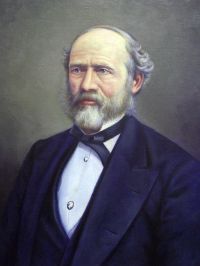
Portrait of William Smith William Smith,  A Smaller Dictionary of Greek and Roman Antiquities

“ In its widest sense it signifies the totality of that which belongs to a Roman citizen who is sui juris, and therefore a paterfamilias. Thus, in certain cases of testamentary disposition, the word familia is explained by the equivalent patrimonium; and the person who received the familia from the testator was called familiae emptor. But the word familia is sometimes limited to signify “persons,” that is, all those who are in the power of a paterfamilias, such as his sons (filii-familias) , daughters, grandchildren, and slaves. ”

Source: Gutenberg

Frederic Seebohm,  Tribal Custom in Anglo-Saxon Law

“ The clause pictures for us the family group as bound together by paternal rites (sacris paternis) . The grandfather is alive and is the paterfamilias. A son who is a filiusfamilias (i.e., as we shall see presently, not an emancipated son) has married and brought into the mansio, or family homestead of the grandfather, property which he had with his wife. [282] This, not having been ‘defined’ on marriage, so as to keep it separate, has become, in the phrase of the Latin text, ‘added to the property of the grandfather.’ The husband has died leaving several sons, it matters not how many. ”
Source: Gutenberg

Frederic Seebohm,  Tribal Custom in Anglo-Saxon Law

“ And we are brought back to the point that in so far as the family group more or less may have resembled the Cymric gwely, and is approached from this point of view, it must be regarded as the group of descendants of a common grandfather or great-grandfather, who is, in the Archbishop’s phrase, the paterfamilias. While he is alive the landed rights are vested in him. ”
Source: Gutenberg

Get perspective with Kwize: daily news enlightened by great literature