Various, Harvard Law Review (1891)
“ Here we see that the patria potestas is the substantive ground, that it is extended to cover free agents, who are not even domestic servants, and that it finds its formal expression in the fiction of identity. ”
Various, Harvard Law Review (1891)
“ Here we see that the patria potestas is the substantive ground, that it is extended to cover free agents, who are not even domestic servants, and that it finds its formal expression in the fiction of identity. ”
Various, Harvard Law Review (1891)
“ So, framing a historical hypothesis, if the starting-point of the modern law is the patria potestas, a little study will show that the fiction of identity is the natural growth from such a germ. There is an antecedent probability that the patria potestas has exerted an influence at least upon existing rules. I have endeavored to prove elsewhere that the unlimited liability of an owner for the torts of his slave grew out of what had been merely a privilege of buying him off from a surrender to the vengeance of the offended party, in both the early Roman and the early German law. ”
 Henry James Sumner Maine,
Ancient Law
(1861)
Henry James Sumner Maine,
Ancient Law
(1861)
“ Why should a conception of Kinship, so elastic as to include strangers brought into the family by adoption, be nevertheless so narrow as to shut out the descendants of a female member? To solve these questions, we must recur to the Patria Potestas. The foundation of Agnation is not the marriage of Father and Mother, but the authority of the Father. All persons are Agnatically connected together who are under the same Paternal Power, or who have been under it, or who might have been under it if their lineal ancestor had lived long enough to exercise his empire. ”
Henry James Sumner Maine,
Ancient Law
(1861)
“ The Patria Potestas of the Romans, which is necessarily our type of the primeval paternal authority, is equally difficult to understand as an institution of civilised life, whether we consider its incidence on the person or its effects on property. ”
Various, Harvard Law Review (1891)
“ I think I now have traced sufficiently the history of agency in torts. The evidence satisfies me that the common law has started from the patria potestas and the frithborh,—whether following or simply helped by the Roman law, it does not matter,—and that it has worked itself out to its limits through the formula of identity. It is true that liability for another as master or principal is not confined to family relations ”
Henry James Sumner Maine,
Ancient Law
(1861)
“ But between these widely distant epochs there is an interval of obscurity, and we can only guess at the causes which permitted the Patria Potestas to last as long as it did by rendering it more tolerable than it appears. The active discharge of the most important among the duties which the son owed to the state must have tempered the authority of his parent if they did not annul it. We can readily persuade ourselves that the paternal despotism could not be brought into play without great scandal against a man of full age occupying a high civil office. ”
A. H. J. Greenidge, Roman Public Life
“ The father might scourge or imprison his child, [82] even put him to death. The formula employed in adrogation (the procedure by which a man puts himself into the paternal power of another) shows that the jus vitae necisque was the most distinctive aspect of the patria potestas. [83] It was a power never questioned throughout the whole of Republican history, and which received no legal limitations until the time of the Middle Empire. ”
 Goldwin Smith,
Does the Bible sanction American slavery…
(1863)
Goldwin Smith,
Does the Bible sanction American slavery…
(1863)
“ Again, in Patriarchal times, the family being the State, and the only government being that of the father of the family, the father, as supreme ruler, had the power of life and death over his child. Among the Romans, tenacious of all old institutions and full of the lust of dominion abroad and at home, this power, under the name of patria potestas, was retained long after the state of society by which alone it was justified had passed away. ”
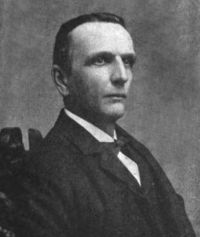 Henry Goudy,
1911 Encyclopædia Britannica
(1911)
Henry Goudy,
1911 Encyclopædia Britannica
(1911)
“ The patria potestas, unless the paterfamilias voluntarily put an end to it, lasted as long as he lived and retained his status. The marriage of a son, unlike that of a daughter passing into the hand of a husband, did not release him from it, nor did his children become subject to him so long as he himself was in potestate. On the contrary, his wife passed on marriage into the power of her father-in-law, and their children as they were born fell under that of their paternal grandfather ”
George Elliott Howard, A History of Matrimonial Institutions…
“ In truth, in the primitive view, relationship is exactly limited by patria potestas. Where the potestas begins, kinship begins; and therefore adoptive relatives are among the kindred. Where the potestas ends, kinship ends; so that a son emancipated by his father loses all rights of agnation. And here we have the reason why the descendants of females are outside the limits of archaic kinship." Indeed "it is obvious that the organization of primitive societies would have been confounded, if men had called themselves relatives of their mother's relatives." ”
Sir Henry Sumner Maine, Ancient Law: Its Connection to the History of Early Society
“ The subsequent popularity of wills, and the indulgence with which the law came to regard them, were due to a desire to correct the rigidity of the Patria Potestas, as reflected in the law of intestate succession, by giving free scope to natural affection. In other words, the conception of relationship as reckoned only through males, and as resting on the continuance of the children within their father's power, gave way, through the instrumentality of the will, to the more modern and more natural conception of relationship. ”
A. H. J. Greenidge, Roman Public Life
“ It is through him alone that the family is a person; and the authority he wields over the members subordinated to his will is called potestas. [75] The power over the children is described as patria potestas, as over the slave it is dominica. The two do not differ legally; there is only a difference of ethical signification. Under this potestas fall, firstly, the children, both sons and daughters; secondly, the descendants of these children; thirdly, the wife united to her lord by a form of marriage which makes her a member of the family ”
Henry Goudy,
1911 Encyclopædia Britannica
(1911)
“ Neither in adoption nor emancipation, however, was emancipation to the paterfamilias essential, though it was usual, and in the case of emancipation carried with it important rights of succession and tutory. For daughters and grandchildren the pontifical jurists by a casuistic interpretation of the said law held one emancipation to be in all cases enough to extinguish the patria potestas. ”
Sir Henry Sumner Maine, Ancient Law: Its Connection to the History of Early Society
“ Even this, the utmost relaxation of the Roman Patria Potestas, left it far ampler and severer than any analogous institution of the modern world. The earliest modern writers on jurisprudence remark that it was only the fiercer and ruder of the conquerors of the empire, and notably the nations of Sclavonic origin, which exhibited a Patria Potestas at all resembling that which was described in the Pandects and the Code. All the Germanic immigrants seem to have recognised a corporate union of the family under the mund, or authority of a patriarchal chief ”
Clifton Wilbraham Collins, Sophocles (1871)
“ Hæmon, Creon's son, betrothed to Antigone—and who is perhaps the only "lover" in all ancient tragedy, so widely different is the Greek drama from our own—comes now to plead for the life of his affianced bride. Then ensues a scene familiar in life and fiction, where two strong wills inevitably clash—the son eager and impassioned, the father hardened by that sense of duty never so keenly felt as when stimulated by a private pique. The first and foremost of all duties in the home and in the state, argues Creon, is obedience. The family must be one—united under the patria potestas. ”
Harold Whetstone Johnston, The Private Life of the Romans
“ The Head of such a family—"household" or "house" is the nearest English word—was always suī iūris ("independent," "one's own master") , while the others were aliēnō iūrī subiectī ("dependent") .18 The authority of the pater familiās over his wife was called manus, over his descendants patria potestās, over his chattels dominica potestās. So long as he lived and retained his citizenship, these powers could be terminated only by his own deliberate act. He could dispose of his property by gift or sale as freely as we do now. ”
Henry James Sumner Maine,
Ancient Law
(1861)
“ Patria Potestas, the, of the Romans, 133. —— of the Galatæ, 136. —— of the Greeks, 136, 137. —— causes which helped to mitigate the stringency of the father's power over the persons of his children, 141. —— liabilities of the Paterfamilias, 145. —— unity of person between the Paterfamilias and the Filiusfamilias, 145. —— rights and duties of the Paterfamilias, 145, 146, 234, 235. —— the Patria Potestas not a durable institution, 146. ”
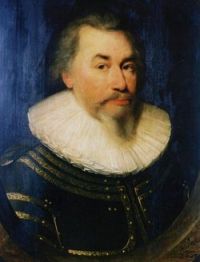 Robert Filmer,
Patriarcha — Chapter I
(1680)
Robert Filmer,
Patriarcha — Chapter I
(1680)
“ If we compare the Natural Rights of a Father with those of a King, we find them all one, without any difference at all but only in the Latitude or Extent of them: as the Father over one Family, so the King as Father over many Families extends his care to preserve, feed, cloth, instruct and defend the whole Commonwealth. His War, his Peace, his Courts of Justice, and all his Acts of Sovereignty tend only to preserve and distribute to every subordinate and inferiour Father, and to their Children, their Rights and Privileges ”
 Thomas Hill Green,
Lectures on the Principles of Political Obligation
Thomas Hill Green,
Lectures on the Principles of Political Obligation
“ Even then his patriotism will hardly be the passion which it needs to be, unless his judgment of what he owes to the state is quickened by a feeling of which the 'patria,' the fatherland, the seat of one's home, is the natural object ”
History of Woman Suffrage, Volume III
“ We have resorted to all the measures dictated by those who rule over us for securing the freedom to exercise rights which are sacredly our own, rights which are ours by Divine inheritance, and which men can neither confer nor take away. We are not only daughters of our Father in heaven, and joint heirs with you there; but we are daughters of this republic, and joint heirs with you here. ”
Robert Filmer,
Patriarcha — Chapter III
(1680)
“ That familiar Distinction of the School-men, whereby they subject Kings to the Directive, but not to the Coactive Power of Laws, is a Confession, that Kings are not bound by the positive Laws of any Nation, since the compulsory Power of Laws is that which properly makes Laws to be Laws by binding Men by Rewards or Punishment to Obedience; whereas the Direction of the Law is but like the Advice and Direction which the Kings Council gives the King, which no Man says is a Law to the King. ”
Horace Gray, United States v. Wong Kim Ark…
“ And then, while maintaining that the civil status is universally governed by the single principle of domicil, domicilium, the criterion established by international law for the purpose of determining civil status, and the basis on whichthe personal rights of the party, that is to say, the law which determines his majority or minority, his marriage, succession, testacy or intestacy, [p657] must depend, he yet distinctly recognized that a man's political status, his country, patria, and his "nationality, that is, natural allegiance," "may depend on different laws in different countries." ”
William F. Russell, The Short Constitution
“ Other nations have received their laws from conquerors; some are indebted for a constitution to the suffering of their ancestors through revolving centuries. The people of this country, alone, have formally and deliberately chosen a government for themselves, and with open and uninfluenced consent bound themselves into a social compact. Here no man proclaims his birth or wealth as a title to honorable distinction, or to sanctify ignorance and vice with the name of hereditary authority. ”
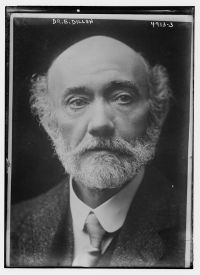 Emile Joseph Dillon,
England and Germany
Emile Joseph Dillon,
England and Germany
“ The law of double citizenship, coupled with a plenary indulgence for treason and perjury in the cause of the Fatherland, is but the solemn consecration of a principle which was long practised and is warmly approved by the entire German people. ”
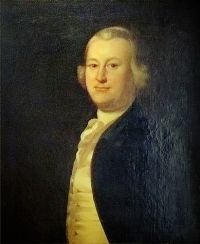 James Otis Jr.,
The Rights of the British Colonies Asserted and Proved
(1764)
James Otis Jr.,
The Rights of the British Colonies Asserted and Proved
(1764)
“ Had these guardians power to bind both infants and women during life and their posterity after them? Is it in nature or reason that a guardian should by his own act perpetuate his power over his ward and bind him and his posterity in chains? Is not every man born as free by nature as his father? Has he not the same natural right to think and act and contract for himself? Is it possible for a man to have a natural right to make a slave of himself or of his posterity? Can a father supersede the laws of nature? What man is or ever was born free if every man is not? ”
History of Woman Suffrage (1887)
“ And as the State commands marriage, and as the woman contracts marriage as an obligation to the State, the State is bound by every sacred obligation of justice to render the contract an equal one. And here comes up again the barbaric element—the predominance of physical force. "Shall this softer, gentler, more fragile creature be the equal of the ruder, stouter man?" "Yes," says your Christianity, "She is a divine institution, as you are; she desires the same culture, the same respect, the same authority." "No," says your barbarism, "I can oppress her, and I will. ”
Robert Filmer,
Patriarcha — Chapter III
(1680)
“ Many will be ready to say, It is a Slavish and Dangerous Condition to be subject to the Will of any One Man, who is not subject to the Laws. But such Men consider not, 1. That the Prerogative of a King is to be above all Laws, for the good only of them that are under the Laws, and to defend the Peoples Liberties, as His Majesty graciously affirmed in His Speech after His last Answer to the Petition of Right: Howsoever some are afraid of the Name of Prerogative, yet they may assure themselves the Case of Subjects would be desperately miserable without it. ”
 Philipp Melanchthon,
The Augsburg Confession
(1530)
Philipp Melanchthon,
The Augsburg Confession
(1530)
“ If they have any other power or jurisdiction, in hearing and judging certain cases, as of matrimony or of tithes, etc., they have it by human right in which matters princes are bound even against their will, when the ordinaries fail, to dispense justice to their subjects for the maintenance of peace. ”
History of Woman Suffrage, Volume II
“ This fresh insult to the women of the Republic, who so bravely shared the dangers and sacrifices of the late war, has roused us to more earnest and persistent efforts to secure those rights, privileges, and immunities that belong to every citizen under Government. As you hold the Constitution of the fathers to be a sacred legacy to us and our children forever, we ask you to save it from this desecration, which deprives one-half our citizens of the right of representation in the Government. ”
Various, The Catholic World, Vol. 14, October 1871-March 1872
“ These men, it is well known, mock the inspired word of God and deny his very existence, contemn truth, ignore the first principles of justice, and scoff at the beautiful domestic virtues which bind the wife in affectionate duty to the husband, and the child in love and gratitude to the parent. Empires are governed mainly by force, republics through obedience, and yet those pretended apostles of freedom acknowledge no law except their own and that of their passions. ”
H. A. O'Brien, Journal of the Straits Branch of the Royal Asiatic Society (1891)
“ Let the native institutions as far as regards religious ceremonies, marriage and inheritance be respected when they may not be inconsistent with justice and humanity or injurious to the peace and morals of society. Let all men be considered equal in the eye of the Law. ”
Moses Hess, Rome and Jerusalem. The Last National Question… (1918)
“ They may tolerate us and even grant us emancipation, but they will never respect us as long as we place the principle ubi bene ibi patria [where it is good, there is the homeland] above our own great national memories. ”
 Eugène Sue,
The Sword of Honor; or, The Foundation of the French Republic
Eugène Sue,
The Sword of Honor; or, The Foundation of the French Republic
“ A nation has the power, but never the right, to alienate its sovereignty, either in whole or in part, by delegating it to a hereditary family. Such an alienation, imposed amid the violence of conquest, borne out of habits of thought, or consented to in a moment of public aberration, binds neither the present generation nor those to come. ”
 Voltaire,
Voltaire's Philosophical Dictionary
Voltaire,
Voltaire's Philosophical Dictionary
“ If to every man it is permitted by natural right to choose his fatherland, he who has lost the right of citizen can, with all the more reason, choose for himself a new fatherland; but can he bear arms against his former fellow-citizens? There are a thousand examples of it. How many French protestants naturalized in Holland, England and Germany have served against France, and against armies containing their own kindred and their own brothers! The Greeks who were in the King of Persia's armies made war on the Greeks, their former compatriots. ”
