Thomas Macall Fallow

Biographical details

Thomas Macall Fallow,  1911 Encyclopædia Britannica, Volume 7… (1911)

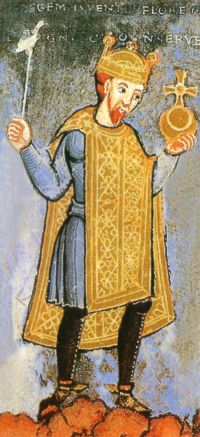
“ Pictorial representations in early manuscripts, and the rude effigies on their coins, are not very helpful in deciding as to the form of crown worn by the Anglo-Saxon and Danish kings of England before the Norman Conquest. In some cases it would appear as if the diadem studded with pearls had been worn, and in others something more of the character of a crown. We reach surer ground after the Conquest, for then the great seals, monumental effigies, and coins become more and more serviceable in determining the forms the crown took. ”
Source: Wikisource

Thomas Macall Fallow,  1911 Encyclopædia Britannica, Volume 7… (1911)

“ The last, a compound of olive oil and balsam, is only used for the most sacred purposes, and the oil of the catechumens was that used for the unction of kings. In France, however, a legend gained credence that, as a special sign of divine favour, the Holy Dove had miraculously descended from heaven, bearing a vessel (afterwards called the Sainte Ampoule) , containing holy oil, and had placed it on the altar for the coronation of Clovis. A drop of oil from the Sainte Ampoule mixed with chrism was afterwards used for anointing the kings of France. ”
Source: Wikisource

Thomas Macall Fallow,  1911 Encyclopædia Britannica (1911)

“ There is no indication of the observance of the Easter festival in the New Testament, or in the writings of the apostolic Fathers. The sanctity of special times was an idea absent from the minds of the first Christians. “The whole of time is a festival unto Christians because of the excellency of the good things which have been given” is the comment of St Chrysostom on 1 Cor. v. 7, which has been erroneously supposed to refer to an apostolic observance of Easter. ”
Source: Wikisource

Get perspective with Kwize: daily news enlightened by great literature