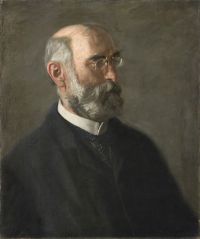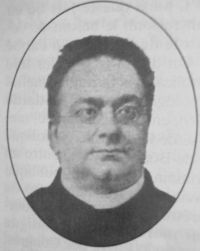
Umberto Benigni

Biographical details

Portrait of Umberto Benigni Umberto Benigni,  Catholic Encyclopedia (1913)

“ Unfortunately, in Rome the Renaissance took on more and more of a pagan character, and fell into the hands of humanists without faith and without morals. This imparted to the academic movement a tendency to pagan humanism, one evidence of which is found in the celebrated Roman Academy of Pomponio Leto.
Giulio, the natural son of a nobleman of the Sanseverino family, born in Calabria in 1425, and known by his academic name of "Pomponius Lætus", came to Rome, where he devoted his energies to the enthusiastic study of classical antiquity, and attracted a great number of disciples and admirers.
”
Source: Wikisource

Portrait of Umberto Benigni Umberto Benigni,  Catholic Encyclopedia (1913)

“ Naturally this higher definitive form of the new or remodelled Roman academies was closely allied with the general academic movement of Italy and of foreign countries, whose typical instance was the French Academy founded by Richelieu. It was then that academies became practical and efficacious instruments of culture, with a direct influence on public opinion; in this way, too, they claimed the special attention of the heads of the State. This was especially the case at Rome, where the papacy kept up its traditional patronage of the most varied ecclesiastical and general scholarship. ”
Source: Wikisource

Get perspective with Kwize: daily news enlightened by great literature