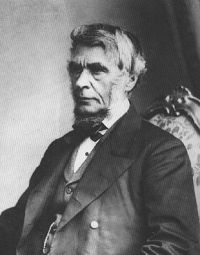
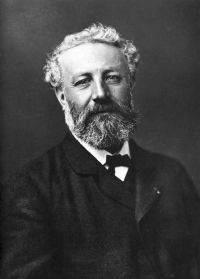
by Nathaniel Lord Britton & Addison Brown An Illustrated Flora of the Northern United States… (1913)

The grouping of Races into Species, of Species into Genera, and of Genera into Families, though based upon natural characters and relationships, is not governed by any definite rule that can be drawn from nature for determining just what characters shall be sufficient to constitute a Species, a Genus or a Family.
Source: Wikisource

by Nathaniel Lord Britton & Addison Brown An Illustrated Flora of the Northern United States… (1913)

The Seed-bearing plants form the most numerous group in existence, not less than 120,000 species being known. The subkingdom was formerly known as Phanerogamia, or Phaenogamia and more recently as Anthophyta, this term signifying the presence of flowers, which characterizes most of the group. But the consideration that the spore-bearing organs of the Pine Family cannot well be regarded as flowers, and the fact that the production of seeds is the most characteristic difference between these plants and the Pteridophyta, are reasons which have led to the acceptance of the term here adopted.
Source: Wikisource

by Nathaniel Lord Britton & Addison Brown An Illustrated Flora of the Northern United States… (1913)

Critical field observations of plants in the wild state, supplemented by the cultivation side by side of species supposed to be distinct and by the lessons learned from experimental plant breeding, have developed the theory that many species, perhaps all, are composed of a greater or lesser number of races, differing from each other too little to cause them to be regarded as species, notwithstanding the fact that they may breed true from seed to such slight or trivial differentiations.
Source: Wikisource

Get perspective with Kwize: daily news enlightened by great literature