Summary

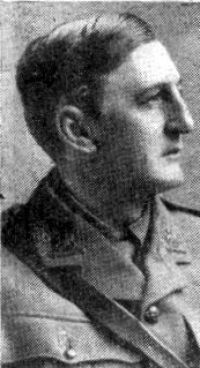
Portrait of A. E. W. Mason A. E. W. Mason The Summons — V: Hillyard's Messenger (1920)

But it would make no difference to the herd. Hillyard pictured them below by the water's edge, their heads lifted, their tails stiffened, waiting in the darkness. Once the lone, earth-shaking roar of a lion spread from far away, booming over the dark country. But the herd below never stirred. It no more feared the lion than it feared the four men on the river bank above. An hour passed before at last the river water plashed under the trampling hoofs.
Hillyard threw his rifle forward, but the shikari touched him on the arm.
Source: Wikisource

Portrait of A. E. W. Mason A. E. W. Mason The Summons — V: Hillyard's Messenger (1920)

In single file they moved from the bank amongst the mimosas, the donkey with his head covered, still led by the boy. Under the cavern of the branches it was black as pitch—so black that Hillyard did not see the hand which the shikari quietly laid upon his shoulder.
"Listen."
On his left a branch snapped, ahead of them a bush that had been bent aside swished back on its release.
"They are moving with us. They are all round us," the shikari whispered. "They know everything we do. Let us wait here. When the morning breaks they will charge or they will go."
Source: Wikisource

Portrait of A. E. W. Mason A. E. W. Mason The Summons — V: Hillyard's Messenger (1920)

Hillyard leaned from his donkey and took the carbine from the postman's hand. It was an ancient thing of Spanish manufacture, heavy as a pig of lead.
"But this can't be of any use," he cried. "Is the man never attacked?"
Hamet talked with the Arab in a dialect Hillyard did not understand at all; and interpreted the conversation.
"No. He has only once fired his rifle. One night—oh, a long way farther to the south—he waked up to see an elephant fighting his little donkey in the moonlight and he fired his rifle and the elephant ran away.
Source: Wikisource

Get perspective with Kwize: daily news enlightened by great literature