Summary

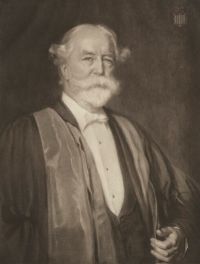
Portrait of A. W. Ward A. W. Ward The Cambridge Modern History — CHAPTER II (1903)

To a modern reader the theology of New England, the sermons and the controversial treatises, can, with very rare exceptions, be nothing but a weariness. Their dogmatising is for the most part to us meaningless, buried under the successive strata of thought which three centuries have produced: their controversial fencing has the cumbrous elaboration and tortuousness which were the besetting vices of Elizabethan hterature. Yet they claim our respect as written not only by men, but for men, who did not shrink from resolute study and serious thought.
Source: Wikisource

Portrait of A. W. Ward A. W. Ward The Cambridge Modern History — CHAPTER II (1903)

In 1743 Oglethorpe also departed, never to return. If Georgia had not become all that its founders hoped, one may at least say that Oglethorpe had attained a far larger measure of success than most men could have won with such material. Broken and shiftless men could not be made at once into prosperous and hard-working citizens. But the colony held together: it fulfilled its function as an outpost against the Spanish invasion: it had given the settlers a life far better than that which they left behind.
Source: Wikisource

Portrait of A. W. Ward A. W. Ward The Cambridge Modern History — CHAPTER II (1903)

In the colonies outside New England we have nothing that can be called a school of literature. We find men in whom colonial life had quickened the habit of observation, and who have left us vivid descriptions of what was striking in the physical life of the newly-discovered world. Virginia produced three waiters who at least showed that a colonist could attain a high standard of culture and expression.
Source: Wikisource

Get perspective with Kwize: daily news enlightened by great literature