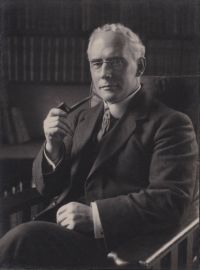
Albert Frederick Pollard

Albert Frederick Pollard

Summary

Portrait of Albert Frederick Pollard Albert Frederick Pollard The Cambridge Modern History, Volume 2… (1904)

But at length the havoc wrought among his Italian and Spanish troops by a mid-winter siege conquered even his obstinacy. With a grumble at the fickleness of Fortune who preferred a young King to an old Emperor, he raised the siege on January 1, 1553, and turned his back on his German dominions for ever. Success in the war with France would have meant a renewed effort to divide and crush the Lutheran Princes, to rivet the Spanish succession on Germany, and to restore the Catholic faith. Charles' failure left Germany free to settle these questions herself.
Source: Wikisource

Portrait of Albert Frederick Pollard Albert Frederick Pollard The Cambridge Modern History, Volume 2… (1904)

There is no more disappointing epoch in German history than the reign of Charles V; if in its course it shattered some idols, it also shattered ideals. It began full of hope, and the nation seemed young. There were plans for reforming the Church and renewing the Empire; no one dreamt of dividing the one and destroying the other. Yet such was the result. The Reformation began with ideas and ended in force. In the Germany of the sixteenth, as in that of the nineteenth century, an era of liberal thought closed in a fever of war
Source: Wikisource

Portrait of Albert Frederick Pollard Albert Frederick Pollard The Cambridge Modern History, Volume 2… (1904)

The appeal to France involved a radical alteration of Hans of Cüstrin's original plan. His object had been merely defence against the threatening aspect assumed by Charles V, but mere defence was of no use to Henry II. French support could only be bought by making the league offensive, and offence was also Maurice's plan. Chagrined at having to yield the first place in the league to Maurice, and alarmed, perhaps, by the terms which Henry II demanded, Hans broke away from the league. A German who was both a patriot and a Protestant could indeed have been offered no more painful choice.
Source: Wikisource

Get perspective with Kwize: daily news enlightened by great literature