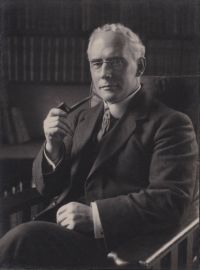
Albert Frederick Pollard

Albert Frederick Pollard

Summary

Portrait of Albert Frederick Pollard Albert Frederick Pollard The Cambridge Modern History, Volume 2… (1904)

Peasants adopted with fervour the doctrine of universal priesthood, and began themselves to preach and baptise. Schappeler announced at Memmingen that heaven was open to peasants, but closed to nobles and clergy. But while this was heresy, it was hardly sedition; most of the preachers believed as Luther did, in the efficacy of the Word, and repudiated Miinzer's appeal to the sword; and the promise of heaven hereafter might be expected to reconcile rather than to exasperate the peasant with his lot on earth. Yet it exerted an indirect stimulus, for men do not rebel in despair, but in hope
Source: Wikisource

Portrait of Albert Frederick Pollard Albert Frederick Pollard The Cambridge Modern History, Volume 2… (1904)

It has been no less a point of honour with Protestant writers, and especially with Germans, to vindicate both the man and the movement from the taint of revolution. The fact that the peasants adopted the Lutheran phrases about brotherly love and Christian liberty proves little, for in a theological age it is difficult to express any movement except in theological terms, and behind these common phrases there lay a radical divergence of aims and methods. The Gospel according to Luther may have contained a message for villeins and serfs, but it did not proclaim the worldly redemption they sought
Source: Wikisource

Portrait of Albert Frederick Pollard Albert Frederick Pollard The Cambridge Modern History, Volume 2… (1904)

There was enough truth in it to give point to Murner's satire of Luther as the champion of the Bundschuh, the leader of those who proclaimed that, as Christ had freed them all, and all were children and heirs of one father, all should share alike, all be priests and gentlemen, and pay rents and respect to no man. The outbreak of the Peasants' War appeared to be an invincible corroboration of the charge, and from that day to this it has been almost a commonplace with Catholic historians that the Reformation was the parent of the revolt.
Source: Wikisource

Get perspective with Kwize: daily news enlightened by great literature