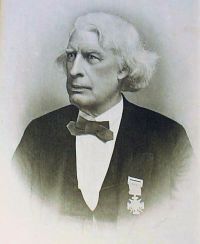
Albert Mackey

Albert Mackey

Summary

Portrait of Albert Mackey Albert Mackey The Principles of Masonic Law… (1856 | portal)

The safety of the minority, the preservation of harmony, and the dispatch of business, all require that there should be, in every well-regulated society, some rules and forms for the government of their proceedings, and, as has been justly observed by an able writer on parliamentary law, "whether these forms be in all cases the most rational or not, is really not of so great importance; for it is much more material that there should be a rule to go by, than what that rule is."
Source: Wikisource

Portrait of Albert Mackey Albert Mackey The Principles of Masonic Law… (1856 | portal)

It is, in fact, wrong that the Master should even by courtesy permit such an appeal to be taken; because, as the Committee of Correspondence of the Grand Lodge of Tennessee have wisely remarked, by the admission of such appeals by courtesy, "is established ultimately a precedent from which will be claimed the right to take appeals." [3] If a member is aggrieved with the conduct or the decisions of the Master, he has his redress by an appeal to the Grand Lodge, which will of course see that the Master does not rule his lodge "in an unjust or arbitrary manner."
Source: Wikisource

Portrait of Albert Mackey Albert Mackey The Principles of Masonic Law… (1856 | portal)

But lodges of Freemasons differ so much in their organization and character from other societies, that this law will, in very few cases, be found applicable; and, indeed, in many positively inapplicable to them. The rules, therefore, for the government of masonic lodges are in general to be deduced from the usages of the Order, from traditional or written authority, and where both of them are silent, from analogy to the character of the institution.
Source: Wikisource

Get perspective with Kwize: daily news enlightened by great literature