Summary

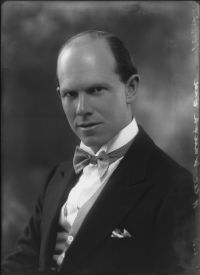
Portrait of Alec Waugh Alec Waugh The Prisoners of Mainz

We must all work together, we must work not towards individual prosperity, but towards the prosperity of the community. No longer can we fight our enemies in the field, but we can wage a silent war, we can prepare ourselves so that afterwards we may be triumphant. We must work collectively: we must unite: the life of this camp should be like one machine, in which you are all cogs. And so, gentlemen, I have brought forward my scheme. I have called it the Pitt League, because, well, gentlemen, because it rhymes with grit.
Source: Gutenberg

Portrait of Alec Waugh Alec Waugh The Prisoners of Mainz

In the time when his enthusiasms had been kept in control by the business of war, he had been an excellent soldier; but once captured, he had no outlet for his temperament. Looking down on the court from the window of his room, he was horrified at the thought of so many subalterns passing out of his hands, out of the hands of discipline back into the individual energies of civilian life. And Colonel Westcott hated individualism: he liked to see humanity moving forward in one compact body, with himself at its head.
Source: Gutenberg

Portrait of Alec Waugh Alec Waugh The Prisoners of Mainz

At Mainz Milton Hayes could see and, as it were, speak to each individual present, and before he had been on the stage five minutes one felt as if he were an old friend that one had known all one’s life. He caught the true spirit of intimacy, the kindredship with his audience, that is the whole secret of the music-hall profession.
During the first two months the programme did not change much. There would be always some slight variety in a new stunt by Hayes, a new tune by Dowdon, or a topical sketch.
Source: Gutenberg

Get perspective with Kwize: daily news enlightened by great literature