Summary

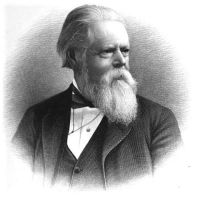
Portrait of Alfred Charles Hobbs Alfred Charles Hobbs Rudimentary Treatise on the Construction of Locks (1853)

The commercial importance of locks—though of course never seriously questioned when once fairly brought before one's attention—has been recently rendered so apparent as to have risen to the position of a public topic. If a strong room, containing gold and silver, notes and bills, books and papers—if such a room be necessarily shielded from intrusion, it becomes no less necessary that the shield should be really worthy of its name, trusty and reliable: a good lock is here nearly as indispensable as a faithful cashier.
Source: Wikisource

Portrait of Alfred Charles Hobbs Alfred Charles Hobbs Rudimentary Treatise on the Construction of Locks (1853)

If a lock—let it have been made in whatever country, or by whatever maker—is not so inviolable as it has hitherto been deemed to be, surely it is to the interest of honest persons to know this fact, because the dishonest are tolerably certain to be the first to apply the knowledge practically; and the spread of the knowledge is necessary to give fair play to those who might suffer by ignorance. It cannot be too earnestly urged, that an acquaintance with real facts will, in the end, be better for all parties.
Source: Wikisource

Portrait of Alfred Charles Hobbs Alfred Charles Hobbs Rudimentary Treatise on the Construction of Locks (1853)

Every improvement in the manufacture of iron, steel, and brass—that is, in the tool-making and machine-making processes—may be made to reflect its light on the lock-manufacture; the stamping, the casting, the planing, the slotting, the screw-cutting, the polishing of metals,—all, in proportion as they are improved, impart some of their aid to the lock-maker. Then, in the finer kinds of locks, the works are so delicate as to approach to the nicety of clockwork
Source: Wikisource

Get perspective with Kwize: daily news enlightened by great literature