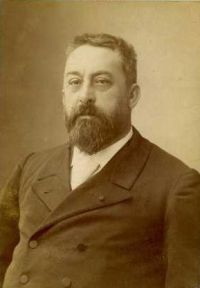
Alfred Nicolas Rambaud

Alfred Nicolas Rambaud

Summary

Portrait of Alfred Nicolas Rambaud Alfred Nicolas Rambaud,  History of Russia — Chapter 9 (1898)

“ The iron cannot penetrate their armor, nor the axe break it. In vain he seeks counsel at the tomb of his father; the tomb is silent, “the leaves murmur plaintively, the winds sigh drearily, the dew itself is troubled, the eye of the clouds is wet”; all Esthonian nature shares in the sinister forebodings of the national hero. ”
Source: Wikisource

Portrait of Alfred Nicolas Rambaud Alfred Nicolas Rambaud,  History of Russia — Chapter 9 (1898)

“ Strengthened by this alliance, the “brothers of the army of Christ” were able to impose the most cruel servitude on the aboriginal Letts, Livonians, and Finns. These brave barbarians soon became peasants attached to the glebe. The German nobility restored them their liberty at the beginning of this century, but it did not restore them their lands.
The conquering and conquered races are always separate. To the Tchoud, the word Saxa (Saxon, German) always signifies the master.
”
Source: Wikisource

Portrait of Alfred Nicolas Rambaud Alfred Nicolas Rambaud,  History of Russia — Chapter 9 (1898)

“ The knights were likewise far superior in their arms and tactics. The German fortresses were solidly built in cemented stone, while those of the natives were ramparts of earth, wood, or loose stones. In vain they tried to drag down with ropes the palisades of the German ramparts. The Sword-bearers afterwards undertook a series of campaigns against the Livonians and the Semigalli of the Dwina, and against the Tchouds of the north and the Letts of the south-east. If a tribe declined baptism and obedience, it was delivered a prey to fire and sword ”
Source: Wikisource

Get perspective with Kwize: daily news enlightened by great literature