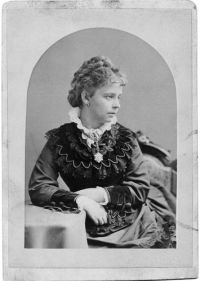
Alice Morse Earle

Alice Morse Earle

Summary

Portrait of Alice Morse Earle Alice Morse Earle Home Life in Colonial Days

The flax-dresser with the shives, fibres, and dirt of flax covering his garments, and his face begrimed with flax-dirt has disappeared; the noise of his brake and swingling knife has ended, and the boys no longer make bonfires of his swingling tow. The sound of the spinning-wheel, the song of the spinster, and the snapping of the clock-reel all have ceased; the warping bars and quill wheel are gone, and the thwack of the loom is heard only in the factory. The spinning woman of King Lemuel cannot be found.
Source: Gutenberg

Portrait of Alice Morse Earle Alice Morse Earle Home Life in Colonial Days

Adjoining the street through which I always, in my childhood, walked slowly each Sunday, on my way to and from church, was a spot to detain lingering footsteps—a beautiful garden laid out and tenanted like the gardens of colonial days, and serene with the atmosphere of a worthy old age; a garden which had been tended for over half a century by a withered old man and his wife, whose golden wedding was spent in the house they had built, and in the garden they had planted when they were bride and groom.
Source: Gutenberg

Portrait of Alice Morse Earle Alice Morse Earle Home Life in Colonial Days

A log-rolling in early pioneer days, in the Northern colonies and in western Virginia and the central states, was a noble example of generous coöperation, where each gave of his best—his time, strength, and good will; and where all worked to clear the ground in the forest for a home-farm for a neighbor who might be newly come and an entire stranger, but who in turn would just as cheerfully and energetically give his work for others when it was needed.
Source: Gutenberg

Get perspective with Kwize: daily news enlightened by great literature