Summary

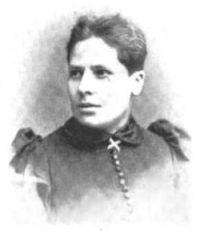
Portrait of Alice Werner Alice Werner The natives of British Central Africa (1906)

She is able to make her investigations quite undisturbed, as no one likes to venture out after dark during her stay, lest he should meet her and be fixed on as the culprit. When her preparations are complete, the people are called together by the sound of the great drum. Then she begins to dance, working up herself and the spectators to a furious pitch of excitement, rushes round, smells their hands to see if she can detect any traces of strange food eaten at the unholy banquet, and at last calls on the guilty person by the name she pretends to have heard him addressed by at the grave.
Source: Gutenberg

Portrait of Alice Werner Alice Werner The natives of British Central Africa (1906)

On a moonless night in September, perhaps, you will see the black hills seamed with curved and zigzag lines of fire, as the blaze advances. Here and there a clump of dry scrub, or a dead tree, will burst into a sheet of flame, lighting up the dense white clouds of smoke. The heated air within the hollow stalks of grass and reeds expands till they burst with a sound like the firing of guns, which rises above a roar loud as that of the traffic of a great city.
Source: Gutenberg

Portrait of Alice Werner Alice Werner The natives of British Central Africa (1906)

Duff Macdonald has made it clear that the ‘gods’ of the Yaos—or, at least, those most definitely thought of as such, are the spirits of the dead—of a man’s father or grandfather, or the chief of his village,—sometimes of a great chief, who ruled over a large extent of country, like Kangomba of Sochi. When such an one lived long ago, people are apt to forget who he was when alive, and to think of him as a spirit only. Such spirits are often associated with particular hills, as is the case with Sochi and Ndirande, and might easily be mistaken by inquirers for genuine nature-powers.
Source: Gutenberg

Get perspective with Kwize: daily news enlightened by great literature