Summary

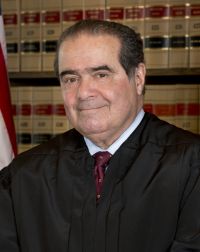
Portrait of Antonin Scalia Antonin Scalia County of Yakima v. Confederated Tribes and Bands of Yakima Indian Nation…

If the Yakima Nation believes that the objectives of the Indian Reorganization Act are too much obstructed by the clearly retained remnant of an earlier policy, it must make that argument to Congress. Judges "are not at liberty to pick and choose among congressional enactments, and when two [or more] statutes are capable of co-existence, it is the duty of the courts, absent a clearly expressed congressional intention to the contrary, to regard each as effective."
Source: Wikisource

Portrait of Antonin Scalia Antonin Scalia County of Yakima v. Confederated Tribes and Bands of Yakima Indian Nation…

A lien upon real estate to satisfy a tax does not convert the tax into a tax upon real estate otherwise all sorts of state taxation of reservation-Indian activities could be validated (even the cigarette sales tax disallowed in Moe ) by merely making the unpaid tax assessable against the taxpayer's fee-patented real estate. Thus, we cannot even accept the County's narrower contention that the excise tax lien is enforceable against reservation fee property conveyed by an Indian seller to a non-Indian buyer.
Source: Wikisource

Portrait of Antonin Scalia Antonin Scalia County of Yakima v. Confederated Tribes and Bands of Yakima Indian Nation…

Yakima County sought to impose two separate taxes with respect to reservation fee lands, an ad valorem tax and an excise tax on sales. We discuss each in turn, in light of the principles set forth above.
Liability for the ad valorem tax flows exclusively from ownership of realty on the annual date of assessment. See Timber Traders, Inc. v. Johnston, 87 Wash.2d 42, 47, 548 P.2d 1080, 1083 (1976) . The tax, moreover, creates a burden on the property alone.
Source: Wikisource

Get perspective with Kwize: daily news enlightened by great literature