Summary

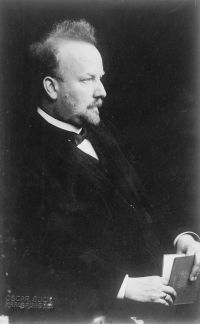
Portrait of Arthur Drews Arthur Drews The Witnesses to the Historicity of Jesus… (1912)

Those who cling to an historical Jesus on religious grounds merely show that they have never understood the real nature of religion, or what “faith” really means in the religious sense of the word. They see only the interest of their Church, which assuredly profits by a confusion of true religious faith, of a trustful surrender to the God within us with the intellectual acceptance of certain facts of either a dogmatic or an historical character; they only deceive themselves and others when they imagine that they are promoting the interest of religion.
Source: Wikisource

Portrait of Arthur Drews Arthur Drews The Witnesses to the Historicity of Jesus… (1912)

A philosophy that thus comes to terms with theology, a “perfectly safe philosophy” which seeks to live in peace with theology, is unworthy of the name. For it is not the work of philosophy merely to prepare academic theses, and deal with things that have no interest for any person outside the lecture-hall and the study: its greatest cultural task is to defend the rights of reason, to extend its sway over every province of knowledge, and to rationalise faith.
Source: Wikisource

Portrait of Arthur Drews Arthur Drews The Witnesses to the Historicity of Jesus… (1912)

What a situation it is when the deepest thoughts of the modern mind must be measured by the teaching of Jesus, and referred to a world of ideas that has nothing to recommend it but the antiquity of its traditions and the artificially engendered appreciation of everything connected with it!
At the same time the Christ-myth controversy is a struggle over religion. Religion is a life that emanates from the depths of one's innermost self, an outgrowth of the mind and of freedom.
Source: Wikisource

Get perspective with Kwize: daily news enlightened by great literature