Summary

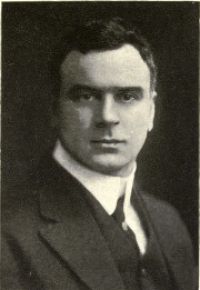
Portrait of Arthur Stringer Arthur Stringer The Man Who Couldn't Sleep — I. Running Out of Pay-Dirt (1919)

And as it gathered I began to feel that I ought to have an establishment—not a back-room studio in Washington Square, nor a garret in the Village of the Free-Versers, nor a mere apartment in the West Sixties, nor even a duplex overlooking Central Park South. I wanted to be something more than a number. I wanted a house, a house of my own, and a cat-footed butler to put a hickory-log on the fire, and a full set of Sévres on my mahogany sideboard, and something to stretch a strip of red carpet across when the landaulets and the limousines rolled up to my door.
Source: Wikisource

Portrait of Arthur Stringer Arthur Stringer The Man Who Couldn't Sleep — I. Running Out of Pay-Dirt (1919)

Yet in Benson, my butler, I undoubtedly found a gem of the first water. He moved about as silent as a panther, yet as watchful as an eagle. He could be ubiquitous and self-obliterating at one and the same time. He was meekness incarnate, and yet he could coerce me into a predetermined line of conduct as inexorably as steel rails lead a street-car along its predestined line of traffic. He was, in fact, much more than a butler.
Source: Wikisource

Portrait of Arthur Stringer Arthur Stringer The Man Who Couldn't Sleep — I. Running Out of Pay-Dirt (1919)

But there was a new note in the man's demeanor, a note which even through that black fog of terror reached me and awakened my resentment. We were partners in crime. We were fellow-actors in a drama of indescribable cowardice, and I was in the man's power, to the end of time.
The outcome of that catastrophe, as I have already said, was indefinite, torturingly indefinite. I was too shaken and sick to ferret out its consequences. I left that to Latreille, who seemed to understand well enough what I expected of him.
Source: Wikisource

Get perspective with Kwize: daily news enlightened by great literature