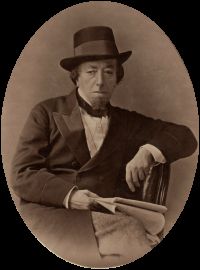
Benjamin Disraeli

Benjamin Disraeli

Summary

Portrait of Benjamin Disraeli Benjamin Disraeli,  Sybil — Book 2/Chapter 5

“ I prefer association to gregariousness."
"That is a distinction," said Egremont, musingly.
"It is a community of purpose that constitutes society," continued the younger stranger; "without that, men may be drawn into contiguity, but they still continue virtually isolated."
"And is that their condition in cities?"
"It is their condition everywhere; but in cities that condition is aggravated. A density of population implies a severer struggle for existence, and a consequent repulsion of elements brought into too close contact. In great cities men are brought together by the desire of gain.
”
Source: Wikisource

Portrait of Benjamin Disraeli Benjamin Disraeli,  Sybil — Book 2/Chapter 5

“ As long as the monks existed, the people, when aggrieved, had property on their side. And now 'tis all over," said the stranger; "and travellers come and stare at these ruins, and think themselves very wise to moralize over time. They are the children of violence, not of time. It is war that created these ruins, civil war, of all our civil wars the most inhuman, for it was waged with the unresisting. The monasteries were taken by storm, they were sacked, gutted, battered with warlike instruments, blown up with gunpowder ”
Source: Wikisource

Portrait of Benjamin Disraeli Benjamin Disraeli,  Sybil — Book 2/Chapter 5

“ The stranger paused; Egremont was silent, but looked inquiringly.
"Yes," resumed the younger stranger after a moment's interval. "Two nations; between whom there is no intercourse and no sympathy; who are as ignorant of each other's habits, thoughts, and feelings, as if they were dwellers in different zones, or inhabitants of different planets; who are formed by a different breeding, are fed by a different food, are ordered by different manners, and are not governed by the same laws."
”
Source: Wikisource

Get perspective with Kwize: daily news enlightened by great literature