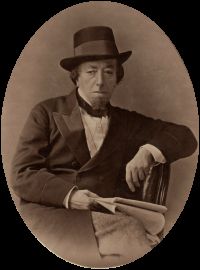
Benjamin Disraeli

Benjamin Disraeli

Summary

Portrait of Benjamin Disraeli Benjamin Disraeli Tancred — Chapter VI. A Festal Day (1847)

If anything can save the aristocracy in this levelling age, it is an appreciation of men of genius. Certainly it would have been very gratifying to Leander if his Grace had only sent him a message, or if Lord Montacute had expressed a wish to see him. He had been long musing over some dish à la Montacute for this very day. The young lord was reputed to have talent; this dish might touch his fancy; the homage of a great artist flatters youth; this offering of genius might colour his destiny.
Source: Wikisource

Portrait of Benjamin Disraeli Benjamin Disraeli Tancred — Chapter VI. A Festal Day (1847)

That then was the reason he was brought down to Bellamont Castle; because some of the greatest personages in England, who never had eaten a proper dinner in their lives, would have an opportunity, for the first time, of witnessing art. What could the praise of the Duke of Clanronald, or Lord Hampshire, or Lord Hull, signify to one who had shared the confidence of a Lord Monmouth, and whom Sir Alexander Grant, the first judge in Europe, had declared the only man of genius of the age? Leander erred too in supposing that his achievements had been lost upon the guests at Bellamont.
Source: Wikisource

Portrait of Benjamin Disraeli Benjamin Disraeli Tancred — Chapter VI. A Festal Day (1847)

Leander had a mission to perform.
'If I were you, I would exert myself, Leander,' said Lord Eskdale.
'Ah! my lord, if all men were like you! If artists were only sure of being appreciated; if we were but understood, a dinner would become a sacrifice to the gods, and a kitchen would be Paradise.'
In the meantime, the mayor and town-councillors of Montacute, in their robes of office, and preceded by their bedels and their mace-bearer, have entered the gates of the castle.
Source: Wikisource

Get perspective with Kwize: daily news enlightened by great literature