Summary

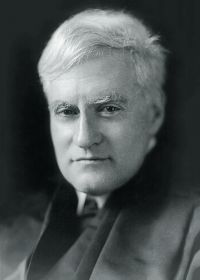
Portrait of Benjamin N. Cardozo Benjamin N. Cardozo Burnet v. Guggenheim — Opinion of the Court

Congress did not mean that the tax should be paid twice, or partly at one time and partly at another. If a revocable deed of trust is a present transfer by gift, there is not another transfer when the power is extinguished. If there is not a present transfer upon the delivery of the revocable deed, then there is such a transfer upon the extinguishment of the power. There must be a choice, and a consistent choice, between the one date and the other. To arrive at a decision, we have therefore to put to ourselves the question, Which choice is it the more likely that Congress would have made?
Source: Wikisource

Portrait of Benjamin N. Cardozo Benjamin N. Cardozo Burnet v. Guggenheim — Opinion of the Court

No doubt the draftsman of the statute would have done well if he had been equally explicit in the drafting of part 2. This is not to say that meaning has been lost because extraordinary foresight would have served to make it clearer. Here as so often there is a choice between uncertainties. We must be content to choose the lesser. To lay the tax at once, while the deed is subject to the power, is to lay it on a gift that may never become consummate in any real or beneficial sense. To lay it later on is to unite benefit with burden.
Source: Wikisource

Portrait of Benjamin N. Cardozo Benjamin N. Cardozo Burnet v. Guggenheim — Opinion of the Court

One must strike a balance of advantage. It happens that the taxpayer before us made his deeds in 1917, before a transfer by gift was subject to a tax. We shall alleviate his burden if we say that the gift was then complete. On the other hand, we shall be heightening the burdens of taxpayers who made deeds of gift after the act of 1924. In making them, they had the assurance of a treasury regulation that the tax would not be laid, while the power of revocation was uncanceled, except upon the income paid from year to year.
Source: Wikisource

Get perspective with Kwize: daily news enlightened by great literature