Summary

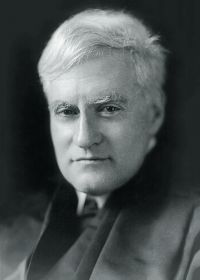
Portrait of Benjamin N. Cardozo Benjamin N. Cardozo Nixon v. Condon — Opinion of the Court

To furnish their nominees as claimants for the popular favor in the general elections is a matter which concerns alone those parties that desire to make such nominations. It is alone their concern because they alone are interested in the success of their nominees. The State, as a government, cannot afford to concern itself in the success of the nominees of any political party, or in the elective offices of the people being filled only by those who are the nominees of some political party.
Source: Wikisource

Portrait of Benjamin N. Cardozo Benjamin N. Cardozo Nixon v. Condon — Opinion of the Court

There is no suggestion in the opinion that the inherent power of the committee was broad enough (apart from legislation) to permit it to prescribe the extent of party membership, to say to a group of voters, ready as was the petitioner to take the statutory pledge, that one class should be eligible and another not. On the contrary, the whole opinion is instinct with the concession that pretensions so extraordinary must find their warrant in a statute. The most that can be said for the respondents is that the inherent powers of the committee are still unsettled in the local courts.
Source: Wikisource

Portrait of Benjamin N. Cardozo Benjamin N. Cardozo Nixon v. Condon — Opinion of the Court

If another view were to be accepted, a committee might rule out of the party a faction distasteful to itself, and exclude the very men who had helped to bring it into existence. In any event, the Supreme Court of Texas has not yet spoken on the subject with clearness or finality, and nothing in its pronouncements brings us to the belief that, in the absence of a statute or other express grant, it would recognize a mere committee as invested with all the powers of the party assembled in convention.
Source: Wikisource

Get perspective with Kwize: daily news enlightened by great literature