Summary

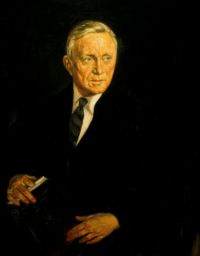
Portrait of William O. Douglas William O. Douglas United States v. Classic — Dissent

It means that the Constitution should be read so as to give Congress an expansive implied power to place beyond the pale acts which, in their direct or indirect effect, impair the integrity of Congressional elections. For when corruption enters, the election is no longer free, the choice of the people is affected. To hold that Congress is powerless to control these primaries would indeed be a narrow construction of the Constitution inconsistent with the view that that instrument of government was designed not only for contemporary needs but for the vicissitudes of time.
Source: Wikisource

Portrait of William O. Douglas William O. Douglas United States v. Classic — Dissent

Civil liberties are too dear to permit conviction for crimes which are only implied and which can be spelled out only by adding inference to inference.
Sec. 19 does not purport to be an exercise by Congress of its power to regulate primaries. It merely penalizes conspiracies 'to injure, oppress, threaten, or intimidate any citizen in the free exercise or enjoyment of any right or privilege secured to him by the Constitution or laws of the United States'.
Source: Wikisource

Portrait of William O. Douglas William O. Douglas United States v. Classic — Dissent

If a person is to be convicted of a crime, the offense must be clearly and plainly embraced within the statute. As stated by Chief Justice Marshall in United States v. Wiltberger, 5 Wheat. 76, 105, 5 L.Ed. 37, 'probability is not a guide which a court, in construing a penal statute, can safely take.' It is one thing to allow wide and generous scope to the express and implied powers of Congress; it is distinctly another to read into the vague and general language of an act of Congress specifications of crimes.
Source: Wikisource

Get perspective with Kwize: daily news enlightened by great literature