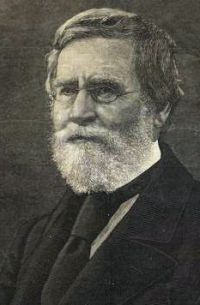
Ralph Waldo Emerson,
Representative Men: Seven Lectures
Ralph Waldo Emerson,
Representative Men: Seven Lectures
“ There is no thought in any mind, but it quickly tends to convert itself into a power, and organizes a huge instrumentality of means. ”
Instrumentality refers to the quality of an item or action being valued primarily as a means to an end, rather than for its intrinsic worth. This concept has been explored by thinkers such as Ralph Waldo Emerson, who emphasized the transformative power of ideas into practical tools, and John Dewey, who underscored the importance of appreciating knowledge both as a goal and a resource for other purposes.
Henri Amiel linked instrumentality to the disciplined organization of life’s resources, while Diogenes Laërtius framed it within the interplay of action and external forces. These perspectives collectively highlight instrumentality as a bridge between purpose and execution, shaping human endeavor across philosophy and practice.
Ralph Waldo Emerson,
Representative Men: Seven Lectures
“ There is no thought in any mind, but it quickly tends to convert itself into a power, and organizes a huge instrumentality of means. ”
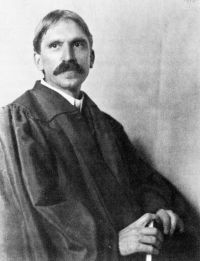 John Dewey,
Democracy and Education
(1916)
John Dewey,
Democracy and Education
(1916)
“ It is true of arithmetic as it is of poetry that in some place and at some time it ought to be a good to be appreciated on its own account—just as an enjoyable experience, in short. If it is not, then when the time and place come for it to be used as a means or instrumentality, it will be in just that much handicapped. Never having been realized or appreciated for itself, one will miss something of its capacity as a resource for other ends. ”
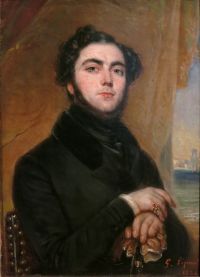 Eugène Sue,
The Branding Needle; or, The Monastery of Charolles
Eugène Sue,
The Branding Needle; or, The Monastery of Charolles
“ I wish to count by the millions the instruments of my will! I wish, by a mere gesture, to cause the power of my arms to be felt from one confine of the world to the other! I wish to increase my kingdom to an infinite extent! ”
Henri Frédéric Amiel, Amiel's Journal: The Journal Intime of Henri-Frédéric Amiel
“ To know where one is going and what one wishes—this is order; to keep one’s word and one’s engagements—again order; to have everything ready under one’s hand, to be able to dispose of all one’s forces, and to have all one’s means of whatever kind under command—still order; to discipline one’s habits, one’s effort, one’s wishes; to organize one’s life, to distribute one’s time, to take the measure of one’s duties and make one’s rights respected; to employ one’s capital and resources, one’s talent and one’s chances profitably—all this belongs to and is included in the word order. ”
 Diogenes Laërtius,
Lives of the Eminent Philosophers…
(1925)
Diogenes Laërtius,
Lives of the Eminent Philosophers…
(1925)
“ The fourth division of power or influence is doing, or being done by, well or ill; thus we can become ill or be educated, be restored to health and the like. Power, then, is either in the mind, or the body, or in armies and resources, or in acting and being acted upon. ”
 Brigham Young,
Journal of Discourses — Volume 1…
Brigham Young,
Journal of Discourses — Volume 1…
“ When that which inhabits this body, that which came from the regions of glory, is enlightened by the influence, power, and Spirit of the Father of light, it swallows up the organization which pertains to this world. ”
Various, The Arena, Volume 4, No. 20, July…
“ To sing the ideal, to love humanity, to believe in progress, to pray toward the infinite. To be the servant of God in the task of progress, and the apostle of God to the people,—such is the law which regulates growth. All power is duty. Should this power enter into repose in our age? Should duty shut its eyes? ”
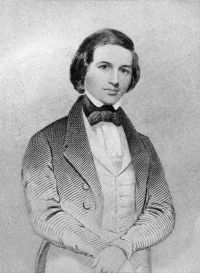 T. S. Arthur,
Finger Posts on the Way of Life
T. S. Arthur,
Finger Posts on the Way of Life
“ Ah! how few of us, when the will is strong with its purpose, can believe in the power of agencies so apparently insignificant! And yet all great influences effect their ends silently, unobtrusively, and with a force that seems at first glance to be altogether inadequate. ”
P. Coffey, Ontology, or the Theory of Being
“ We may, therefore, define an instrumental cause as one which, when acting as an instrument, produces the effect not by virtue of its inherent power alone, but by virtue of a power communicated to it by some principal cause which acts through it. A principal cause, on the other hand, is one which produces its effect by virtue of an active power permanently inherent in itself. ”
“ We must recognise our particular form, the instrument that each of us—each of us who carries anything—carries in his being. Mastering this instrument, learning to play it in perfection—that's what I call duty, what I call conduct, what I call success. ”
 Ralph Waldo Trine,
In Tune with the Infinite; or, Fullness of Peace…
Ralph Waldo Trine,
In Tune with the Infinite; or, Fullness of Peace…
“ In the degree that you come into harmony and work in conjunction with the higher powers that will speak through you will you have the real power of moulding and of moving men. If you use merely your physical agents, you will be simply a demagogue. If you open yourself so that the voice of God can speak through and use your physical agents, you will become a great and true orator, great and true in just the degree that you so open yourself. ”
J. D. Buck, The New Avatar and The Destiny of the Soul
“ It is domination, the mastery, so far as it goes or exists at all, of the will, voluntary powers, and sensory organs of one individual, by the will of another; thus reversing completely the process of nature.To dominate the will of another is to weaken it. Timidity, apprehension, fear, are in inverse ratio to confidence, self-assurance, courage, and self-control.Health, happiness, and self-development lie along the lines of man’s higher evolution, and the basic principle, the primary power, the minister of state, is the rational and intelligent Will. ”
Mary G. Ware, The elements of character
“ Where the mind is absorbed in some one object of reform, this constant devotion to duty is almost, if not quite, impossible. The mind becomes so warped in one direction that it loses the habit, and almost loses the power, of turning in any other. Hence we rarely hear the word duty from the lips of the reformer. ”
J. H. Kurtz, Church History (Volumes 1-3)
“ Adherence to rigid order, and unconditional obedience to reasonable demands, and a mild discipline, with strict control, and a regular system by which one was set to watch another, were the means used for arousing to the utmost a spirit of emulation and giving a sharp spur to ambition. ”
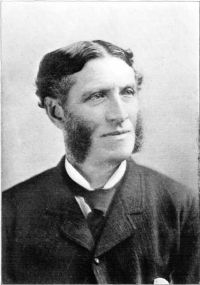 Matthew Arnold,
Culture and Anarchy — Chapter IV: Hebraism and Hellenism
(1882)
Matthew Arnold,
Culture and Anarchy — Chapter IV: Hebraism and Hellenism
(1882)
“ In all directions our habitual causes of action seem to be losing efficaciousness, credit, and control, both with others and even with ourselves. Everywhere we see the beginnings of confusion, and we want a clue to some sound order and authority. ”
by James Allen, The Path to Prosperity — 4 : The Silent Power of Thought…
“ The knowledge of the causal power of thought is the basis of all their prophecies, as it is the basis of all real wisdom and power. National events are simply the working out of the psychic forces of the nation. ”
 Charles Horton Cooley,
Social organization
(1909)
Charles Horton Cooley,
Social organization
(1909)
“ Such, for instance, are the poets, prophets, philosophers, inventors and men of science of all ages, the great political, military and religious organizers, [Pg 265] and even the real captains of industry and commerce. All power involves in its origin mental or spiritual force of some sort; and so far as it attaches to passive attributes, like hereditary social position, offices, bank-accounts, and the like, it does so through the aid of conventions and habits which regard these things as repositories of spiritual force and allow them to exercise its function. ”
 Herbert Spencer,
Popular Science Monthly
(1881)
Herbert Spencer,
Popular Science Monthly
(1881)
“ And then there are the respective mental traits produced by daily exercise of power, and by daily submission to power. The ideas, and sentiments, and modes of behavior, perpetually repeated, generate on one side an inherited fitness for command, and on the other side an inherited fitness for obedience; with the result that, in course of time, there arises on both sides the belief that the established relations of classes are the natural ones. ”
Mary T. Longley, Life and labor in the spirit world (1885)
“ No matter in what direction or under what circumstances they found a human creature in need of any service they could render,—whether of a material or spiritual nature,—they must exercise their power, and perform that work. ”
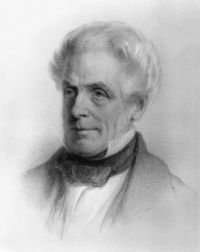 Isaac Taylor,
Natural History of Enthusiasm
Isaac Taylor,
Natural History of Enthusiasm
“ Amid the whirl of myriads of fortuities, the means are selected and combined for constructing as many independent machineries of moral discipline as there are moral agents in the world; and each apparatus is at once complete in itself, and complete as part of a universal movement. ”
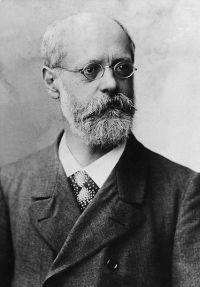 Karl Johann Kautsky,
Ethics and the Materialist Conception of History
(1907)
Karl Johann Kautsky,
Ethics and the Materialist Conception of History
(1907)
“ Are they prescribed to the human race from the beginning of time as an irrevocable demand of nature, or an eternal reason—as commands which man does not produce, but which confront man as a ruling force and show him the aims to which he has ever more and more to strive after? ”
 Mary Baker G. Eddy,
Science and Health with Key to the Scriptures
(1889)
Mary Baker G. Eddy,
Science and Health with Key to the Scriptures
(1889)
“ The power of will should be exercised only by the higher faculties, and curbed by the sentiments, or it will hold the reins, misguide the judgment, and let loose the lower propensities. To guard and govern thought is the province of the higher faculties, acting upon the body beneficially. ”
“ And so I would appeal to those who credit this power of thought to employ it responsibly, and to realise that they are all God’s atoms in the great scheme of things, and must use their personal force as a contribution to the vast thought-waves which can advance, or which, when ill directed, can sweep away a nation. ”
Isaac Taylor,
Natural History of Enthusiasm
“ Skill and sagacity in managing the affairs of common life, or wisdom in council and command, is nothing else than an extensive and ready knowledge of the intricate movements of the great machine of the social system; and the high price which this skill and wisdom always bears among men, may be held to represent two abstractions; first, the perplexing Irregularities of the system to which human agency is to be conformed; and then, the real and substantial Uniformity of the movements of that system. ”
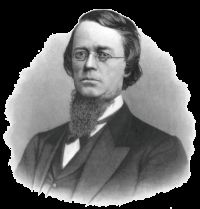 William Henry Holcombe,
The Other Life
(1871)
William Henry Holcombe,
The Other Life
(1871)
“ By the arrangement of forces in that world, the adjustment of equilibriums, the Lord maintains the free-agency of man, and secures that freedom of will and thought which is requisite for regeneration. ”
 W. H. Mallock,
Aristocracy & Evolution
W. H. Mallock,
Aristocracy & Evolution
“ Now out of these five domains of activity the three first—namely, the intellectual, the religious, and the military—are such that the means by which the great man makes his influence felt in them hardly require discussion. In the first place, they are obvious—there is no dispute about what they are; and, in the second place, the fact of their being what they are has no bearing, except such as is very remote, on any disputed question concerning the practical organisation of society. ”
Henry W. Bellows, Christianity and Modern Thought
“ The formation of a character like his would seem peculiarly to require the training that would be afforded by such an endowment. We know how, with ordinary men, the command of unlimited power is, in fact, a test of rectitude, self-government, unselfishness, of the most trying and, it may be, most elevating, kind. ”
 Anthony M. Ludovici,
Nietzsche and Art
Anthony M. Ludovici,
Nietzsche and Art
“ It was their Will to Power that simplified, organized, ordered and schematized the world, and it was their will to prevail which made them proclaim their simplification, their organization, their order and scheme, as the norm, as the thing to be believed, as the world of values which must be regarded as creation itself. ”
 Auguste Comte,
A General View of Positivism
Auguste Comte,
A General View of Positivism
“ Taking the more general question of bringing our political forces into harmony, it seems clear that theoretical and practical power are so totally distinct in origin and operation, whether in relation to the heart, or intellect, or character, that the functions of counsel and of command ought never to belong to the same organs. ”
 Bertrand Russell,
Mysticism and Logic and Other Essays
(1917)
Bertrand Russell,
Mysticism and Logic and Other Essays
(1917)
“ Each impulse has its constitutional ministry of thought and knowledge and reflection, through which possible conflicts of impulses are foreseen, and temporary impulses are controlled by the unifying impulse which may be called wisdom. ”
Zachariah Atwell Mudge, North-Pole Voyages
“ Knowing the trials and hardships which are before us, and feeling the necessity of union, harmony, and discipline, we have determined to abide faithfully by the expedition and our sick comrades, and to do all that we can, as true men, to advance the objects in view. ”
Margaret Pease, Jean Jaurès, socialist and humanitarian (1917)
“ He believed in the power all things have of penetrating each other and of deriving good from this communion—man penetrating and being penetrated by Nature, and human beings understanding each other, uniting with each other in larger and larger units. ”
 Georg Simmel,
The American Journal of Sociology…
Georg Simmel,
The American Journal of Sociology…
“ There are wanting therefore in the mass, as the ruled subject, the resources, adaptabilities, the accommodations, the developments of power which the whole individual possesses through the unity and presence of his total psychical energy. ”
 Friedrich von Schlegel,
The philosophy of life, and philosophy of language…
Friedrich von Schlegel,
The philosophy of life, and philosophy of language…
“ Much, for instance is set down as an independent faculty, which, more correctly regarded, is but a state—or even only a passage from one state into another—or it may be merely a natural talent; or, perhaps, some such happy coincidence and harmonious co-operation of several powers of the soul as constitutes true genius. ”
 John Henry Newman,
An Essay in Aid of a Grammar of Assent
John Henry Newman,
An Essay in Aid of a Grammar of Assent
“ For this law of progress is carried out by means of the acquisition of knowledge, of which inference and assent are the immediate instruments. Supposing, then, the advancement of our nature, both in ourselves individually and as regards the human family, is, to every one of us in his place, a sacred duty, it follows that that duty is intimately bound up with the right use of these two main instruments of fulfilling it. ”
 Victor Hugo,
Toilers of the Sea
Victor Hugo,
Toilers of the Sea
“ Mind, directing the mechanism, forms the counterbalance to the infinite power of the opposing forces. But the opposing forces, too, have their organisation. The elements are conscious of where they go, and what they are about. ”
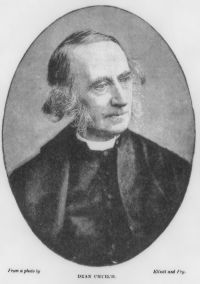 R. W. Church,
Occasional Papers
R. W. Church,
Occasional Papers
“ They were to carry with them a double force—a force of coercion, visible and palpable; a force addressed to conscience, neither visible nor palpable, and in its nature only capable of being inwardly appreciated. ”
 Walter Pater,
Plato and Platonism
Walter Pater,
Plato and Platonism
“ That they may be one!—If, like an individual soul, the state has attained its normal differentiation of parts, as with that also its vitality and effectiveness will be proportionate to the unity of those parts in their various single operations. The productive, the executive, the contemplative orders, respectively, like their psychological analogues, the senses, the will, and the intelligence, will be susceptible each of its own proper virtue or excellence, temperance, bravery, spiritual illumination. ”
 John Ruskin,
Time and Tide by Weare and Tyne
John Ruskin,
Time and Tide by Weare and Tyne
“ Under the term 'skill' I mean to include the united force of experience, intellect, and passion, in their operation on manual labor, and under the term 'passion' to include the entire range of the moral feelings. ”
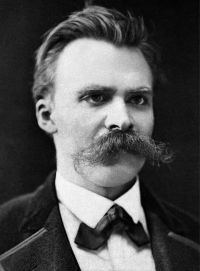 Friedrich Wilhelm Nietzsche,
The Will to Power: An Attempted Transvaluation of All Values…
Friedrich Wilhelm Nietzsche,
The Will to Power: An Attempted Transvaluation of All Values…
“ A multitude will do things an individual will not, because of the division of responsibility, of command and execution; because the virtues of obedience, duty, patriotism, and local sentiment are all introduced ”
 Friedrich Nietzsche,
Beyond Good and Evil
(1886)
Friedrich Nietzsche,
Beyond Good and Evil
(1886)
“ Whichever groups of sensations within a soul awaken most readily, begin to speak, and give the word of command—these decide as to the general order of rank of its values, and determine ultimately its list of desirable things. ”
by James Allen, Entering the Kingdom — At Rest in The Kingdom and All Things Added
“ It will also be seen that as the man obtains the mastery over certain forces within himself, he arrives at a knowledge of all the laws which operate in the realm of those forces, and by watching the ceaseless working of cause and effect within himself, until he understands it, he then understands it in its universal adjustments in the body of humanity. ”
“ These measures were bold, comprehensive and sagacious, and they were carried out with a certain combination of courage and magnanimity which always gives to those who possess it, and who are in a position to exercise it on a commanding scale, great ascendency over the minds of men. ”
Friedrich Wilhelm Nietzsche,
The Will to Power: An Attempted Transvaluation of All Values…
“ The instinct to cleave to something, and the instinct to repel something, are in the inorganic as in the organic world, the uniting bond. The whole distinction is a piece of hasty judgment.The will to power in every combination of forces, defending itself against the stronger and coming down unmercifully upon the weaker, is more correct. ”
Matthew Arnold,
Selections from the Prose Works of Matthew Arnold
“ We may regard this energy driving at practice, this paramount sense of the obligation of duty, self-control, and work, this earnestness in going manfully with the best light we have, as one force. And we may regard the intelligence driving at those ideas which are, after all, the basis of right practice, the ardent sense for all the new and changing combinations of them which man's development brings with it, the indomitable impulse to know and adjust them perfectly, as another force. ”
Henry Thomas Hamblin, Within You is the Power
“ If this Power is mis-used the results are terrible and disastrous. Therefore, use the Power only for the achievement of good and noble aims and in service which shall enrich the life of your fellows, adding to the common good. ”
Friedrich Wilhelm Nietzsche,
The Will to Power: An Attempted Transvaluation of All Values…
“ The will to power.—How must those men be constituted who would undertake this transvaluation? The order of rank as the order of power: war and danger are the prerequisites which allow of a rank maintaining its conditions. The prodigious example: man in Nature—the weakest and shrewdest creature making himself master, and putting a yoke upon all less intelligent forces. ”