Summary

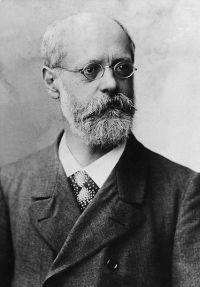
Portrait of Karl Johann Kautsky Karl Johann Kautsky Ethics and the Materialist Conception of History (1907)

Action implies continual choice between various possibilities, and be it only that of doing or not doing, it means accepting or rejecting, defending or opposing. Choice, however, assumes, in advance, the possibility of choice, just as much as the distinction between the acceptable and inacceptable, the good and the bad. The moral judgment, which is an absurdity in the world of the past—the world of experience, in which there is nothing to choose, where iron necessity reigns—is unavoidable in the world of the unknown future—of freedom.
Source: Wikisource

Portrait of Karl Johann Kautsky Karl Johann Kautsky Ethics and the Materialist Conception of History (1907)

As the animal so also the social organism survives so much the better in the struggle for existence the more unitary its movements, the stronger the binding forces, the greater the harmony of the parts. But society has no fixed skeleton which supports the weaker parts, no skin which covers in the whole, no circulation of the blood which nourishes all the parts, no heart which regulates it, no brain which makes a unity out of its knowing, its willing, and its movements.
Source: Wikisource

Portrait of Karl Johann Kautsky Karl Johann Kautsky Ethics and the Materialist Conception of History (1907)

Thus the moral ideal of the uprising classes in historical times has always had the same appearance, always that which the French Revolution summed up with the words, Liberty, Equality, Fraternity. It would seem as if this were the ideal implanted in every human breast, independent of time and space, as if it were the task of the human race to strive from its beginning for the same moral ideal, as if the evolution of man consisted in the gradual approach to this ideal which continually looms before him.
Source: Wikisource

Get perspective with Kwize: daily news enlightened by great literature