Summary

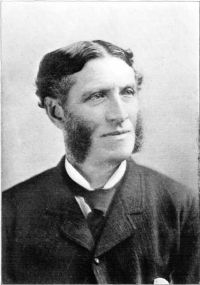
Portrait of Matthew Arnold Matthew Arnold Culture and Anarchy — Chapter IV: Hebraism and Hellenism (1882)

To get rid of one's ignorance, to see things as they are, and by seeing them as they are to see them in their beauty, is the simple and attractive ideal which Hellenism holds out before human nature; and from the simplicity and charm of this ideal, Hellenism, and human life in the hands of Hellenism, is invested with a kind of aërial ease, clearness, and radiancy; they are full of what we call sweetness and light. Difficulties are kept out of view, and the beauty and rationalness of the ideal have all our thoughts.
Source: Wikisource

Portrait of Matthew Arnold Matthew Arnold Culture and Anarchy — Chapter IV: Hebraism and Hellenism (1882)

The nations of our modern world, children of that immense and salutary movement which broke up the Pagan world, inevitably stand to Hellenism in a relation which dwarfs it, and to Hebraism in a relation which magnifies it. They are inevitably prone to take Hebraism as the law of human development, and not as simply a contribution to it, however precious. And yet the lesson must perforce be learned, that the human spirit is wider than the most priceless of the forces which bear it onward, and that to the whole development of man Hebraism itself is, like Hellenism, but a contribution.
Source: Wikisource

Portrait of Matthew Arnold Matthew Arnold Culture and Anarchy — Chapter IV: Hebraism and Hellenism (1882)

The Renascence, that great re-awakening of Hellenism, that irresistible return of humanity to nature and to seeing things as they are, which in art, in literature, and in physics, produced such splendid fruits, had, like the anterior Hellenism of the Pagan world, a side of moral weakness, and of relaxation or insensibility of the moral fibre, which in Italy showed itself with the most startling plainness, but which in France, England, and other countries was very apparent too.
Source: Wikisource

Get perspective with Kwize: daily news enlightened by great literature