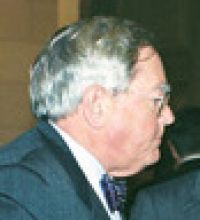
Boyce F. Martin, Jr.

Boyce F. Martin, Jr.

Summary

Portrait of Boyce F. Martin, Jr. Boyce F. Martin, Jr. Thomas More Law Center v. Obama… (2011)

The basic policy idea, for better or worse (and courts must assume better) , is to compel
individuals with the requisite income to pay now rather than later for health care. Faced
with $43 billion in uncompensated care, Congress reasonably could require all covered
individuals to pay for health care now so that money would be available later to pay for
all care as the need arises. Call this mandate what you will—an affront to individual
autonomy or an imperative of national health care—it meets the requirement of
regulating activities that substantially affect interstate commerce.
Source: Wikisource

Portrait of Boyce F. Martin, Jr. Boyce F. Martin, Jr. Thomas More Law Center v. Obama… (2011)

An enforceable line is even more difficult to discern when it comes to health
insurance and the point of buying it: financial risk. Risk is not having money when you
need it. And the mandate is one way of ensuring that all Americans have money to pay
for health care when they inevitably need it. In this context, the notion that self-insuring
amounts to inaction and buying insurance amounts to action is not self-evident.
Source: Wikisource

Portrait of Boyce F. Martin, Jr. Boyce F. Martin, Jr. Thomas More Law Center v. Obama… (2011)

Does the Commerce Clause contain an
action/inaction dichotomy that limits congressional power? No—for several reasons.
First, the relevant text of the Constitution does not contain such a limitation. To the
extent “regulate,” “commerce,” “necessary” and “proper” might be words of
confinement, the Court has not treated them that way, as long as the objects of federal
legislation are economic and substantially affect commerce. All three methods of paying
for medical care (private insurance, public insurance and self-insurance) meet this
modest requirement.
Source: Wikisource

Get perspective with Kwize: daily news enlightened by great literature