Summary

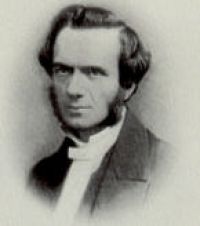
Portrait of Brooke Foss Westcott Brooke Foss Westcott Dictionary of Christian Biography and Literature (1911)

It is impossible here to follow in detail Clement's opinions on special points of doctrine. The contrast which he draws between the gnostic (the philosophic Christian) and the ordinary believer is of more general interest. This contrast underlies the whole plan of his Miscellanies, and explains the different aspects in which doctrine, according to his view, might be regarded as an object of faith and as an object of knowledge. Faith is the foundation
Source: Wikisource

Portrait of Brooke Foss Westcott Brooke Foss Westcott Dictionary of Christian Biography and Literature (1911)

The gospel is, as Clement shews with consummate eloquence, the New Song more powerful than that of Orpheus or Arion, new and yet older than the creation (c. 1) , pure and spiritual as contrasted with the sensuality and idolatry of the pagan rites, clear and substantial as compared with the vague hopes of poets and philosophers (2‒9) . In such a case, he argues, custom cannot be pleaded against the duty of conversion. Man is born for God, and is bound to obey the call of God, Who through the Word is waiting to make him like unto Himself.
Source: Wikisource

Portrait of Brooke Foss Westcott Brooke Foss Westcott Dictionary of Christian Biography and Literature (1911)

The gnostic fulfils through the gospel the destiny and nature of mankind, and gathers together the fruit of their varied experience. This thought of the Incarnation as the crown and consummation of the whole history of the world is perhaps that which is most characteristic of Clement's office as an interpreter of the faith. It rests upon his view of human nature, of the providential government of God, of the finality of the Christian dispensation. Man, according to Clement, is born for the service of God.
Source: Wikisource

Get perspective with Kwize: daily news enlightened by great literature