Summary

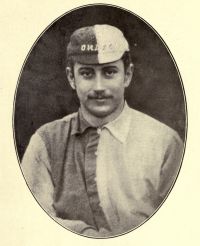
Portrait of C. J. Cornish C. J. Cornish The Naturalist on the Thames

The great carnivorous water-beetle, the dytiscus, after catching and eating other creatures all day, with two-minute intervals to come up, poke the tips of its wings out of the water and jam some air against its spiracles, before descending once more to its subaqueous hunting-grounds, will rise by night from the surface of the Thames, lift again those horny wing-cases, unfold a broad and beautiful pair of gauzy wings, and whirl off on a visit of love and adventure to some distant pond, on to which it descends like a bullet from the air above.
Source: Gutenberg

Portrait of C. J. Cornish C. J. Cornish The Naturalist on the Thames

One slips back into the wood, the other canters to the fence, rising the hill, looks out, whisks his brush and is off--across the turf, over the fifty-acre field of growing wheat, and away to the back of the hills. Half the pack are running the first fox, who has slipped back to the river, but with the other half every one gets clear off, and does his best over the awful ground. The mud explodes like shells as the hoofs crush into it, but somehow every one is across and away, and on to the green road and a line of sainfoin much sooner than could be expected.
Source: Gutenberg

Portrait of C. J. Cornish C. J. Cornish The Naturalist on the Thames

The feet of the hills are clothed by Wittenham Wood, and above the wood stretches the weir, and round to the west, on another great loop of the river, is Long Wittenham and its lovely backwater. Even in winter, when the snow is falling like bags of flour, and the river is chinking with ice, there is plenty to see and learn, or in the floods, when the water roars through the lifted hatches and the rush of the river throbs across the misty flats, and the weeds and sedges smell rank as the stream stews them in its mash-tub in the pool below the weir.
Source: Gutenberg

Get perspective with Kwize: daily news enlightened by great literature