Summary

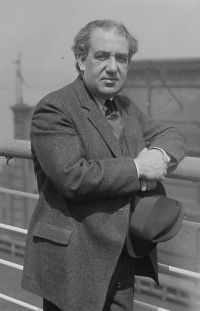
Portrait of Channing Pollock Channing Pollock The Footlights, Fore and Aft

Having to combat that sort of folly was the thing that made it hard to write a society play. It was like dramatizing a novel and trying to create a heroine who would agree with the ten thousand notions of her cherished by the ten thousand readers of the book. Gradually, as the mirror held up to nature has become more nearly true, we have grown to understand that, in the grip of a great joy or grief, a nobleman behaves very much like a bricklayer; sometimes a trifle better, and sometimes, as in the case of the bazaar disaster in Paris, a good deal worse.
Source: Gutenberg

Portrait of Channing Pollock Channing Pollock The Footlights, Fore and Aft

They have no time for fine distinctions between right and wrong; a character is good to them or it is bad, and there's an end to the matter. Ready and waiting with their pity, one cannot help believing that they feel only on the surface, since they are quite able to forget the tragedy of one moment in the comedy of the next. I have seen them sob like babies at the death of a child in the play and break into uproarious laughter a second later at the intrusion of the soubrette.
Source: Gutenberg

Portrait of Channing Pollock Channing Pollock The Footlights, Fore and Aft

There isn't another Great White Way on the face of the earth. Paris has its Place de l'Opera, London its Strand, and Vienna its Ringstrasse, but these resemble New York's theater path only as a candle resembles an arc light. They are streets given up to seekers after pleasure; the Rialto is a street given up to seekers after pleasure, and to seekers after seekers after pleasure. It is not the moths attracted to the flame that lend particular interest to the Great White Way
Source: Gutenberg

Get perspective with Kwize: daily news enlightened by great literature