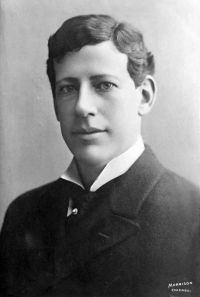
DeWolf Hopper

DeWolf Hopper

Summary

Portrait of DeWolf Hopper DeWolf Hopper Once a Clown, Always a Clown (1927)

Acting is an art, not a spasm. The actress who makes her hearers weep is not the one who weeps herself but the one who seems to weep. Had she not been completely self-possessed, making her every move deliberately with shrewd preknowledge of its effect, she would have had no effect. Had she lost control of herself for an instant, that instant she would have lost control of her audience. Bernhardt, of course, was in the keenest sympathy with the rôle, but she was controlling that sympathy and using it, not permitting it to use her.
Source: Wikisource

Portrait of DeWolf Hopper DeWolf Hopper Once a Clown, Always a Clown (1927)

They have not been to tea, they are not going to tea, they are in no mood for tea, but suddenly amidst their reproaches they burst into song about the delights of a tender, intimate tea. And having sung it and been encored until they are breathless, they return to their quarrel. I single this out only because the show still is a current success and the melody is familiar to all the world.
I have seen musical comedy fade away into the revue, glorified vaudeville where all pretense of plot has been scrapped and nakedness substituted for the story, and now I am seeing the return of light opera.
Source: Wikisource

Portrait of DeWolf Hopper DeWolf Hopper Once a Clown, Always a Clown (1927)

I cannot picture Walter Hampden sauntering down Broadway in the make-up and habiliments of Cyrano de Bergerac, yet this actor parades the streets of the cities he visits in the bizarre garb of his screen character, and glories in it.
There are exceptions—many of them—for whom my respect is enormous, for the man or woman set down in that false and incense-laden air who can retain a level head and a sense of proportion possesses a character sturdier than many of us are blessed with.
Source: Wikisource

Get perspective with Kwize: daily news enlightened by great literature