Summary

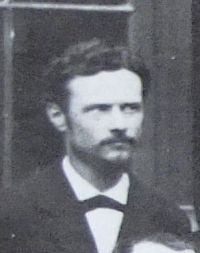
Portrait of Charles Bémont Charles Bémont 1911 Encyclopædia Britannica, Volume 11… (1911)

Thus, in six volumes, he had carried the work no farther than the Carolingian period. The result of this enormous labour, albeit worthy of a great historian, clearly showed that the author lacked all sense of historical proportion. He was a diligent seeker after the truth, and was perfectly sincere when he informed a critic of the exact number of “truths” he had discovered, and when he remarked to one of his pupils a few days before his death, “Rest assured that what I have written in my book is the truth.”
Source: Wikisource

Portrait of Charles Bémont Charles Bémont 1911 Encyclopædia Britannica, Volume 11… (1911)

Fustel de Coulanges was the most conscientious of men, the most systematic and uncompromising of historians. Appointed to a lectureship at the École Normale Supérieure in February 1870, to a professorship at the Paris faculty of letters in 1875, and to the chair of medieval history created for him at the Sorbonne in 1878, he applied himself to the study of the political institutions of ancient France. The invasion of France by the German armies during the war of 1870–71 attracted his attention to the Germanic invasions under the Roman Empire.
Source: Wikisource

Get perspective with Kwize: daily news enlightened by great literature