Summary

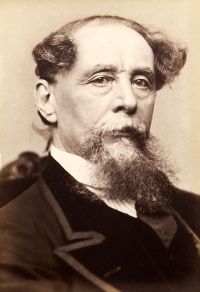
Portrait of Charles Dickens Charles Dickens A Child's History of England — Chapter 16 (1900)

He was a man of great size and great strength; he was very brave and daring; when he spoke to a body of his countrymen, he could rouse them in a wonderful manner by the power of his burning words; he loved Scotland dearly, and he hated England with his utmost might. The domineering conduct of the English who now held the places of trust in Scotland made them as intolerable to the proud Scottish people, as they had been, under similar circumstances, to the Welsh; and no man in all Scotland regarded them with so much smothered rage as William Wallace.
Source: Wikisource

Portrait of Charles Dickens Charles Dickens A Child's History of England — Chapter 16 (1900)

One stormy night, he surprised the Castle of Hawarden, in possession of which an English nobleman had been left; killed the whole garrison, and carried off the nobleman a prisoner to Snowdon. Upon this, the Welsh people rose like one man. King Edward, with his army, marching from Worcester to the Menai Strait, crossed it—near to where the wonderful tubular iron bridge now, in days so different, makes a passage for railway trains—by a bridge of boats that enabled forty men to march abreast.
Source: Wikisource

Portrait of Charles Dickens Charles Dickens A Child's History of England — Chapter 16 (1900)

Wallace instantly struck him dead, and taking refuge among the rocks and hills, and there joining with his countryman, Sir William Douglas, who was also in arms against King Edward, became the most resolute and undaunted champion of a people struggling for their independence that ever lived upon the earth.
The English Guardian of the Kingdom fled before him, and, thus encouraged, the Scottish people revolted everywhere, and fell upon the English without mercy. The Earl of Surrey, by the King's commands, raised all the power of the Border-counties, and two English armies poured into Scotland.
Source: Wikisource

Get perspective with Kwize: daily news enlightened by great literature