Summary

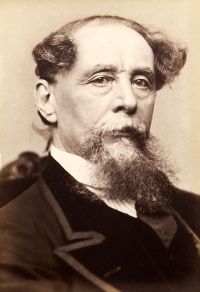
Portrait of Charles Dickens Charles Dickens Bleak House — Chapter VI: Quite at Home (1852)

In the evening, when I was preparing to make tea and Ada was touching the piano in the adjoining room and softly humming a tune to her cousin Richard, which they had happened to mention, he came and sat down on the sofa near me and so spoke of Ada that I almost loved him.
“She is like the morning,” he said. “With that golden hair, those blue eyes, and that fresh bloom on her cheek, she is like the summer morning. The birds here will mistake her for it. We will not call such a lovely young creature as that, who is a joy to all mankind, an orphan. She is the child of the universe.”
Source: Wikisource

Portrait of Charles Dickens Charles Dickens Bleak House — Chapter VI: Quite at Home (1852)

A bell was rung as we drew up, and amidst the sound of its deep voice in the still air, and the distant barking of some dogs, and a gush of light from the opened door, and the smoking and steaming of the heated horses, and the quickened beating of our own hearts, we alighted in no inconsiderable confusion.
“Ada, my love, Esther, my dear, you are welcome. I rejoice to see you! Rick, if I had a hand to spare at present, I would give it you!”
Source: Wikisource

Portrait of Charles Dickens Charles Dickens Bleak House — Chapter VI: Quite at Home (1852)

They (and especially Richard) were naturally pleased, for similar reasons, and considered it no common privilege to be so freely confided in by such an attractive man. The more we listened, the more gaily Mr. Skimpole talked. And what with his fine hilarious manner and his engaging candour and his genial way of lightly tossing his own weaknesses about, as if he had said, “I am a child, you know! You are designing people compared with me” (he really made me consider myself in that light) “but I am gay and innocent; forget your worldly arts and play with me!”
Source: Wikisource

Get perspective with Kwize: daily news enlightened by great literature