Summary

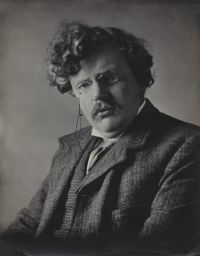
Portrait of Gilbert Keith Chesterton Gilbert Keith Chesterton Appreciations and Criticisms of the Works of Charles Dickens… (1911)

He is always a man; that is to say, he is always unanswerable, always wrong. The passionate certainty of the woman beats itself like battering waves against the thin smooth wall of his insane consistency. I repeat: let any one who thinks that Dickens was a gross and indelicate artist read that part of the book. If Dickens had been the clumsy journalist that such people represent, he never could have written such an episode at all. A clumsy journalist would have made Rick Carstone in his mad career cast off Esther and Ada and the others.
Source: Wikisource

Portrait of Gilbert Keith Chesterton Gilbert Keith Chesterton Appreciations and Criticisms of the Works of Charles Dickens… (1911)

If Carstone is a truly masculine study of how a man goes wrong, Caddy is a perfectly feminine study of how a girl goes right. Nowhere else perhaps in fiction, and certainly nowhere else in Dickens, is the mere female paradox so well epitomised, the unjust use of words covering so much capacity for a justice of ultimate estimate
Source: Wikisource

Portrait of Gilbert Keith Chesterton Gilbert Keith Chesterton Appreciations and Criticisms of the Works of Charles Dickens… (1911)

He will try to love his enemy if only out of mere love of himself. As the wolf dies fighting, the good man gone wrong dies arguing. This is what constitutes the true and real tragedy of Richard Carstone. It is strictly the one and only great tragedy that Dickens wrote. It is like the tragedy of Hamlet. The others are not tragedies because they deal almost with dead men. The tragedy of old Dorrit is merely the sad spectacle of a dotard dragged about Europe in his last childhood. The tragedy of Steerforth is only that of one who dies suddenly
Source: Wikisource

Get perspective with Kwize: daily news enlightened by great literature