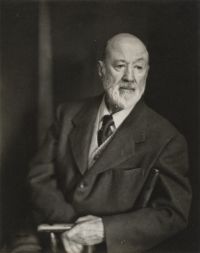
Charles Ives

Charles Ives

Summary

Portrait of Charles Ives Charles Ives Postface to 114 Songs (1922)

Everything from a mule to an oak which nature has given life has a right to that life, and a right to throw into that life all the values it can. Whether they be approved by a human mind or seen with a human eye is no concern of that right. The right of a tree, wherever it stands, is to grow as strong and as beautiful as it can whether seen or unseen, whether made immortal by a Turner, or translated into a part of Seraphic architecture or a kitchen table.
Source: Wikisource

Portrait of Charles Ives Charles Ives Postface to 114 Songs (1922)

Possibly the fondness for personal expression—the kind in which self-indulgence dresses up and miscalls itself freedom—may throw out a skin-deep arrangement, which is readily accepted at first as beautiful—formulae that weaken rather than toughen the musical-muscles. If a composer's conception of his art, its functions and ideals, even if sincere [5] , coincides to such an extent with these groove-colored permutations of tried-out progressions in expediency so that he can arrange them over and over again to his delight—has he or has he not been drugged with an overdose of habit-forming sounds?
Source: Wikisource

Portrait of Charles Ives Charles Ives Postface to 114 Songs (1922)

As he lies on his back under the bed—under all the beds—with nothing beneath him but tacks and his past life, with his soul (to say nothing of his vision) full of that glorious dust of mortals and carpets, with his fingertips rosy with the caresses of his mother-in-law's hammer (her annual argument) —as he lies there taking orders from the hired girl, a sudden and tremendous vocabulary comes to him. Its power is omnipotent, it consumes everything—but the rubbish heap. Before it his virtues quail, hesitate, and crawl carefully out of the cellar window
Source: Wikisource

Get perspective with Kwize: daily news enlightened by great literature