Summary

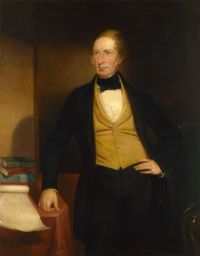
Portrait of Charles Sturt Charles Sturt Two expeditions into the interior of Southern Australia…

It increased considerably in breadth, and stretched away before us in magnificent reaches of from three to six miles in length. The cliffs under which we passed towered above us, like maritime cliffs, and the water dashed against their base like the waves of the sea. They became brighter and brighter in colour, looking like dead gold in the sun’s rays; and formed an unbroken wall of a mile or two in length. The natives on their summits showed as small as crows; and the cockatoos, the eagles, and other birds, were as specks above us
Source: Wikisource

Portrait of Charles Sturt Charles Sturt Two expeditions into the interior of Southern Australia…

As we proceeded down the river, its current became weaker, and its channel somewhat deeper. Our attention was called to a remarkable change in the geology of the country, as well as to an apparent alteration in the natural productions. The cliffs of sand and clay ceased, and were succeeded by a fossil formation of the most singular description. At first, it did not exceed a foot in height above the water, but it gradually rose, like an inclined plane, and resembled in colour, and in appearance, the skulls of men piled one upon the other.
Source: Wikisource

Portrait of Charles Sturt Charles Sturt Two expeditions into the interior of Southern Australia…

I take it to be so in the case before us; and am of opinion, that the lower branches of the Darling are not at all dependent on its sources for a current, or for a supply of water. I have somewhere observed that it appeared to me the depressed interior over which I had already travelled, was of comparatively recent formation. And, by whatever convulsion or change so extensive a tract became exposed, I cannot but infer, that the Darling is the main channel by which the last waters of the ocean were drained off.
Source: Wikisource

Get perspective with Kwize: daily news enlightened by great literature