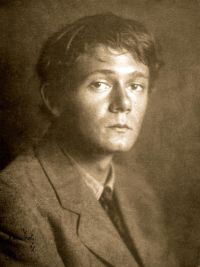
Clark Ashton Smith

Clark Ashton Smith

Summary

Portrait of Clark Ashton Smith Clark Ashton Smith The Metamorphosis of Earth (1951)

The members of a caravan from Timbuctoo, the first to venture into the path of the great storm, had returned within a week, half-mad with terror and telling incoherently of unaccountable changes that had taken place all through the disturbed area. They said that the long, rolling dunes of sand had all disappeared, to be replaced by solid earth and mineral forms such as no one had ever seen before. The earth consisted of great patches of a sort of violet-colored day, very moist, and with a noxious odor that had almost overpowered those who ventured to walk upon it.
Source: Wikisource

Portrait of Clark Ashton Smith Clark Ashton Smith The Metamorphosis of Earth (1951)

Roger Lapham, whose clear, logical brain and prophetic insight have always been a source of inspiration to his fellows, has died lately and is mourned by all. But his spirit still prevails; and even if humanity should lose in the long and catastrophic warfare with an alien foe, the tale of mortal existence and toil and suffering will not have been told in vain.
Source: Wikisource

Portrait of Clark Ashton Smith Clark Ashton Smith The Metamorphosis of Earth (1951)

The terror and mystery of a cataclysm so unparalleled, so far beyond all explanation or imagination, fell like a black pall upon the United States, and horrified the whole cvilized world. The dust from the storm, which was analyzed at once, was found to consist of partially disintegrated molecules; and it required no great reach of fantasy for scientists, reporters and the general public to associate the upheaval with the Saharan sand-storm that had given birth to a terrain of unearthly strangeness.
Source: Wikisource

Get perspective with Kwize: daily news enlightened by great literature