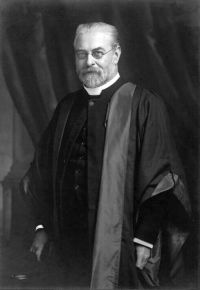
Claude Hermann Walter Johns

Claude Hermann Walter Johns

Summary

Portrait of Claude Hermann Walter Johns Claude Hermann Walter Johns 1911 Encyclopædia Britannica (1910)

If the goods were stolen and the rightful owner reclaimed them, he had to prove his purchase by producing the seller and the deed of sale or witnesses to it. Otherwise he would be adjudged a thief and die. If he proved his purchase, he had to give up the property but had his remedy against the seller or, if he had died, could reclaim five-fold from his estate. A man who bought a slave abroad, might find that he had been stolen or captured from Babylonia, and he had to restore him to his former owner without profit.
Source: Wikisource

Portrait of Claude Hermann Walter Johns Claude Hermann Walter Johns 1911 Encyclopædia Britannica (1910)

Hence the Code allowed a proviso to be inserted in the marriage contract, that the wife should not be seized for her husband’s pre-nuptial debts; but enacted that then he was not responsible for her pre-nuptial debts, and, in any case, that both together were responsible for all debts contracted after marriage. A man might make his wife a settlement by deed of gift, which gave her a life interest in part of his property, and he might reserve to her the right to bequeath it to a favourite child, but she could in no case leave it to her family.
Source: Wikisource

Get perspective with Kwize: daily news enlightened by great literature