Summary

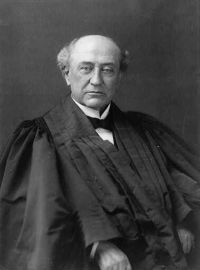
Portrait of David Josiah Brewer David Josiah Brewer Carter v. Ruddy — Opinion of the Court

The court declined to give such peremptory instruction, but charged as follows:
'It is the law that where a party holds a tract of land as a separate and distinct tract, and as one tract, under a claim of title, as the boundaries of the tract are so designated, described, and marked that they may be known, his possession, either by himself or tenants, of a part of the tract, operates as possession of all.
Source: Wikisource

Portrait of David Josiah Brewer David Josiah Brewer Carter v. Ruddy — Opinion of the Court

Idaho 1887,-the first of which, referring to property held for five years under a claim of title founded upon a written instrument, declares that the property so included in such instrument is deemed to have been adversely held, 'except that, when it consists of a tract divided into lots, the possession of one lot is not deemed a possession of any other lot of the same tract'
Source: Wikisource

Portrait of David Josiah Brewer David Josiah Brewer Carter v. Ruddy — Opinion of the Court

While it is true that the act of 1851 does not in terms provide for the issue of a patent, and simply authorizes the location of the scrip upon any public lands, yet the general rule is that a patent is necessary for the transfer of the legal title to public lands. In Bagnell v. Broderick, 13 Pet. 436, 450, it was said: 'Congress has the sole power to declare the dignity and effect of titles emanating from the United States; and the whole legislation of the federal government in reference to the public lands declares the patent the superior and conclusive evidence of legal title.
Source: Wikisource

Get perspective with Kwize: daily news enlightened by great literature